You do not need another workaround to spend crypto. If you already keep part of your balance in USDT or USDC, the real question is how to use virtual crypto cards in a way that feels as fast and familiar as any debit card, without giving up control or security.
That is where virtual crypto cards make sense. They are built for people who want purchasing power now, not after moving funds through an exchange, waiting on a bank transfer, and guessing what fees will show up along the way. Used well, a virtual crypto card turns stablecoin balances into something practical – online checkout, subscriptions, travel bookings, app purchases, and everyday spending anywhere card payments are accepted.
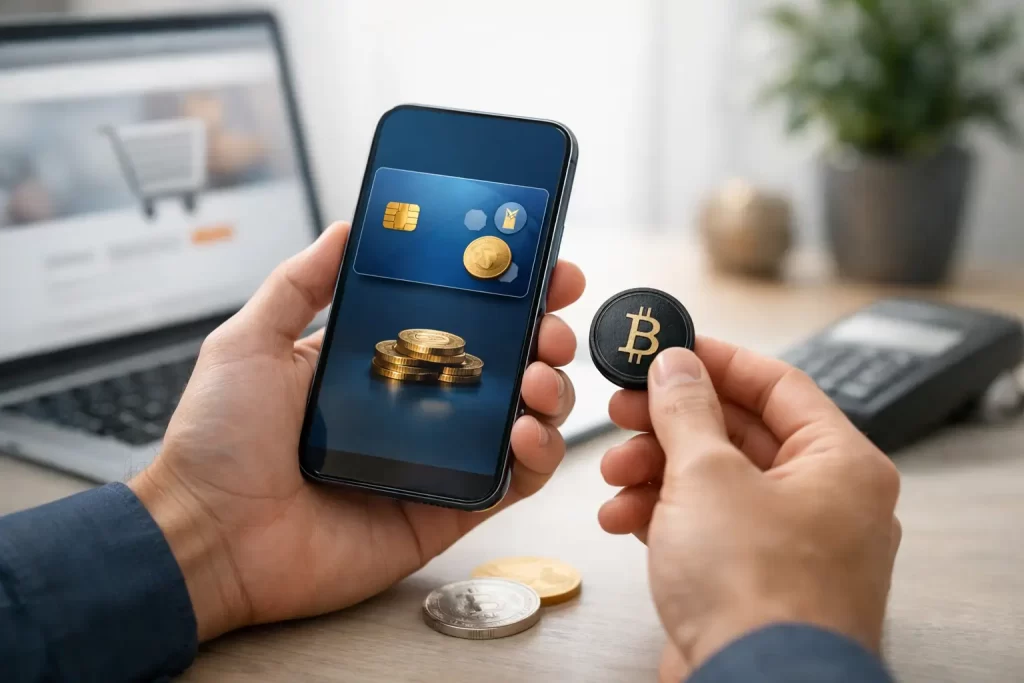
Table of Contents
How to use virtual crypto cards without friction
At a basic level, a virtual crypto card works like a standard card for digital payments. The difference is what funds it. Instead of loading dollars from a bank account, you fund the card from supported crypto balances, often stablecoins, and the platform handles crypto-to-fiat conversion at the time of purchase or when the card is topped up, depending on how the issuer is set up.
For most users, the flow is simple. You sign up, complete verification, secure the account with 2FA, fund the wallet or card balance, and start spending with the card details online or through a mobile wallet if supported. The appeal is obvious – fewer steps between holding crypto and actually using it.
The part that matters is not just access. It is how the platform manages risk, conversion, and control in the background. A virtual card is convenient, but convenience without serious protection is a bad trade. If your provider is not screening wallet risk, enforcing strong authentication, and giving you real-time visibility into transactions, the experience can get expensive fast.
Start with the right use case
Virtual crypto cards are best when speed matters and physical plastic is optional. Think online shopping, recurring software bills, ad spend, hotel bookings, food delivery, rideshare apps, or paying for tools while working abroad. For remote workers and digital nomads, they are often more useful than a bank card because the funding source matches how you already store value.
They are less ideal when cash is your main need. A virtual card can cover digital and tap-to-pay scenarios through Apple Pay or Google Pay, but if you rely on ATM withdrawals, you will usually want a physical companion card. That is one of the main trade-offs. Virtual cards win on instant access and security controls. Physical cards still matter for edge cases in the real world.
Set up your card like you expect to use it
The fastest setup is not always the smartest setup. Before you start spending, decide whether the card is for daily purchases, travel, subscriptions, or one-off online transactions. That choice affects how much you fund, where you store the card, and how tightly you monitor activity.
If the card is for subscriptions or business tools, keep a controlled balance on it instead of parking large amounts there. If it is for travel, make sure mobile wallet support is enabled so you can tap to pay even when a merchant never sees the virtual card number. If it is for general online shopping, use transaction alerts and freeze controls so you can react immediately if something looks wrong.
This is also where a security-first platform earns its place. Features like multi-factor authentication, multi-signature controls, and wallet address risk screening are not just technical extras. They reduce the chance that compromised funds or risky counterparties create problems before you ever make a purchase.
Funding matters more than people think
Most problems users blame on the card actually start with funding. If you are using stablecoins like USDT or USDC, the experience is usually more predictable because the value is designed to stay close to the dollar. That matters when you are paying a fixed merchant amount and do not want price swings between adding funds and checking out.
Using more volatile assets can work, but it introduces timing risk. A purchase that looked covered an hour ago may not be covered now if the market moves. For people who spend regularly, stablecoins are usually the cleaner option because they behave more like a usable cash balance than an investment position.
You should also understand whether your provider converts at the point of sale or requires a prefunded fiat balance. Neither model is automatically better. Real-time conversion can feel more flexible. Prefunding can make budgeting easier and remove surprises at checkout. It depends on how often you spend and how much control you want over conversion timing.
How to use virtual crypto cards for everyday spending
In practice, using the card is straightforward. For online checkout, enter the card number, expiration date, and CVV like any other payment card. For mobile payments, add the card to Apple Pay or Google Pay and use your phone for contactless purchases where accepted.
What makes the experience different is the back end. A well-built crypto card platform converts supported balances quickly, shows transaction activity in real time, and lets you freeze, unfreeze, or review card activity without waiting on a bank. That speed is not a luxury. It is the whole point.
Still, everyday spending works best when you treat the card as a payments tool, not a vault. Keep enough value available for expected purchases, monitor transaction history, and separate long-term holdings from spending balances. That one habit alone reduces risk and makes your finances easier to manage.
Watch the fees, but do not obsess over the wrong ones
People often fixate on issuance fees and miss the bigger picture. The real cost of using a virtual crypto card can come from exchange spreads, foreign transaction markups, inactivity fees, declined transaction patterns, or ATM rules if you later add a physical card.
Transparent pricing matters because a card that looks cheap upfront can become expensive if the conversion model is vague. You want to know what happens when you spend in another currency, whether there is a markup on conversion, and how refunds are handled. Those details matter more than marketing language.
That said, the lowest fee option is not always the best option. If a platform gives you stronger compliance controls, faster support, real-time visibility, and better acceptance, paying slightly more can be the smarter move. Payments reliability has value, especially when you are traveling or relying on the card for work-related purchases.
Security is not optional with crypto cards
This is where many users get too casual. A virtual card can feel safer because there is no physical card to lose, but the account behind it still needs protection. If your email is weak, your password is reused, or alerts are turned off, the virtual format will not save you.
Use a unique password, enable 2FA, and review every funding and spending notification. If your provider offers wallet risk checks, that is a major advantage. Screening wallet addresses for sanctions exposure, mixers, darknet links, and other risk signals helps keep the ecosystem cleaner and reduces the chance of compliance headaches later.
For security-conscious users, this is one reason platforms like KazePay stand out. The combination of risk assessment, multi-sig wallet controls, and multi-factor protection makes the card experience feel closer to real financial infrastructure and farther from the improvisation that still plagues parts of crypto.
Common mistakes to avoid
The most common mistake is treating the card like a bridge from every wallet and every token. Most platforms support specific assets for a reason. Stablecoins usually deliver the best experience, and unsupported funding routes can lead to delays or failed transfers.
Another mistake is assuming every merchant will behave the same way. Hotels, car rentals, and some travel merchants may place temporary authorization holds larger than the final charge. If your balance is tight, that can cause confusion. The purchase is not always broken – the merchant may just be reserving extra funds temporarily.
Finally, do not ignore compliance requirements. Fast signup is great, but legitimate verification protects card access and long-term reliability. If you want a card that keeps working across borders and merchants, compliance is part of the product, not a hurdle outside it.
When a virtual crypto card is the right move
If you want instant access to stablecoin spending, mostly pay online or through a phone wallet, and care about security as much as speed, a virtual crypto card is a strong fit. It cuts out manual off-ramping, keeps spending familiar, and gives your crypto a daily role beyond holding.
If your life involves cash-heavy spending or frequent ATM use, pair it with a physical card. If your balances are mostly in volatile tokens, think carefully about conversion timing. And if a platform cannot clearly explain its protections, fee structure, and funding rules, keep looking.
The best virtual crypto card setup should feel simple on the surface because the hard parts – conversion, compliance, and security – are being handled properly behind the scenes. That is what turns crypto from something you own into something you can actually use with confidence.
Use Stablecoins Like a Normal Card
If your money is already in USDT or USDC, it should spend like it. KazePay’s virtual crypto card gives you fast access to online checkout, subscriptions, travel bookings, and app purchases — with real‑time conversion and the security controls you need.
No exchange delays. No extra work. Just a card that feels familiar.
👉 Sign up for KazePay and start spending stablecoins with confidence.