Crypto debit cards only matter if they solve a real problem: getting your money out of crypto and into daily life without delays, extra steps, or guesswork. For people who hold USDT or USDC, the appeal is simple. You want to pay for groceries, book flights, cover subscriptions, and withdraw cash when needed – without sending funds to an exchange, waiting on a bank transfer, or manually converting every time.
That is where this product category gets practical fast. A good crypto debit card turns stablecoin balances into fiat at the point of purchase, so your crypto becomes usable in the same places traditional debit cards already work. The experience should feel familiar, instant, and dependable. If it feels complicated, it is missing the point.
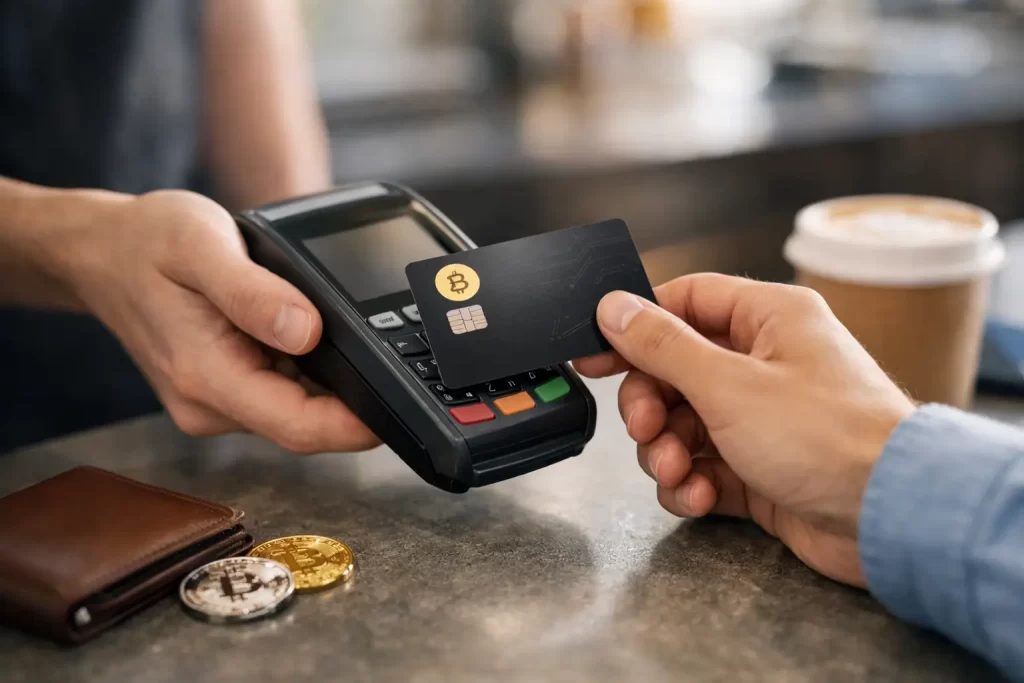
Table of Contents
What crypto debit cards actually do
At the core, crypto debit cards bridge two systems that usually do not talk to each other smoothly. On one side, you have digital assets like USDT and USDC. On the other, you have merchants, card networks, and ATMs that operate in fiat. The card sits in the middle and handles conversion when you pay.
For the user, that means less friction. You fund your account with supported crypto, then spend through a virtual or physical card just like any other debit product. Online checkout works the same way. In-store tap-to-pay works the same way. Mobile wallet support matters here too, because Apple Pay and Google Pay can make crypto spending feel immediate instead of niche.
The difference is not the card form factor. The difference is what powers it behind the scenes.
Why stablecoin users are driving demand
Not every crypto holder wants to spend volatile assets on everyday purchases. Stablecoins are different. They are already used as practical stores of value, working capital, and cross-border payment rails. So it makes sense that stablecoin holders want a card product that matches how they already manage money.
For remote workers, freelancers, and global travelers, this solves a common headache. Income may arrive in crypto. Savings may sit in stablecoins. But rent, coffee, hotels, and software subscriptions still live in the card economy. Crypto debit cards reduce the gap between how you hold value and how you spend it.
That said, there is a trade-off. Convenience is only worth it if fees are clear, conversion is reliable, and card acceptance is broad. If users have to decode hidden charges or wonder whether a transaction will go through abroad, the value drops quickly.
The features that matter most
The best crypto debit cards are not defined by hype. They are defined by speed, reach, and controls.
Instant or real-time conversion is the first requirement. If a card cannot convert supported balances quickly at checkout, it fails the core job. Broad acceptance is next. A crypto card is only useful if it works where people already spend, across online merchants, retail terminals, and ATMs in multiple countries.
Security is where real differentiation shows up. In crypto, trust is not built with vague promises. It comes from specific protections like wallet address risk screening, multi-signature controls, and multi-factor authentication. Those are not marketing extras. They reduce exposure to fraud, sanctioned wallet activity, and operational mistakes that can create serious problems for both users and platforms.
A strong card program should also make spending visible in real time. Users want to track transactions instantly, manage cards easily, and freeze or secure access quickly if something looks off.
Security and compliance are not optional
This is where many buyers have become more selective. People want financial freedom, but they also want safeguards that are real. A crypto card platform should not just help you spend. It should help protect where funds come from, how wallets are accessed, and how risk is monitored before a payment ever happens.
That matters for consumers and even more for partners considering a white-label card launch. If a platform screens wallet addresses for sanctions exposure, darknet links, mixers, and other illicit signals, it is doing more than checking a compliance box. It is protecting the integrity of the payment flow.
For everyday users, that translates into confidence. For businesses, it lowers operational and reputational risk.
Who gets the most value from crypto debit cards
This category is strongest for people who already live partly in crypto and do not want to off-ramp manually every week. If you are paid in stablecoins, travel often, work across borders, or prefer to keep a larger share of funds outside the traditional banking stack, a crypto debit card can be a practical upgrade.
It also works for crypto-curious users who want something familiar. A debit card is easier to understand than an exchange dashboard. When onboarding is quick and fees are transparent, the leap from holding stablecoins to actually spending them becomes much smaller.
For fintechs, wallets, and exchanges, there is another angle. Instead of building card issuing, conversion logic, and compliance workflows from scratch, they can launch branded programs on existing infrastructure. That shortens time to market and reduces complexity.
What to look for before choosing one
Start with supported assets. If you mainly hold USDT and USDC, the card should be optimized for that use case, not treat stablecoins as an afterthought. Then check merchant reach, ATM access, mobile wallet compatibility, and how clearly the platform explains fees.
After that, look at security architecture. Multi-sig custody controls, 2FA, and risk screening are stronger signals than broad claims about safety. The right provider should make those protections visible because they are central to the product, not hidden in fine print.
KazePay reflects where this market is heading: instant spending utility, global card acceptance, and security controls built into the stack from day one. That is the standard users should expect.
The best crypto debit cards do not try to impress you with complexity. They make stablecoins spendable, fast, and secure enough to use in real life.
Make Stablecoins Spendable in Daily Life
A crypto debit card should remove steps, not add them. KazePay turns USDT or USDC into fiat at checkout, so you can pay for groceries, flights, subscriptions, and ATM cash through the card rails merchants already accept.
Familiar. Fast. Built for real use.
👉 Sign up for KazePay and spend stablecoins without manual conversion.