You don’t need another way to hold crypto. You need a way to use it when the bill hits, the flight price drops, or the checkout timer starts counting down. That is where digital wallet crypto payments stop being a nice idea and start becoming real financial utility.
For anyone already holding USDT or USDC, the gap has never been about access to assets. It has been about access to spending. Sending funds between wallets is easy. Paying for groceries, booking a hotel, covering a coworking membership, or taking cash from an ATM without manually cashing out first is where the experience usually breaks down. The best payment tools close that gap fast, securely, and without making you think like a trader every time you want to buy lunch.
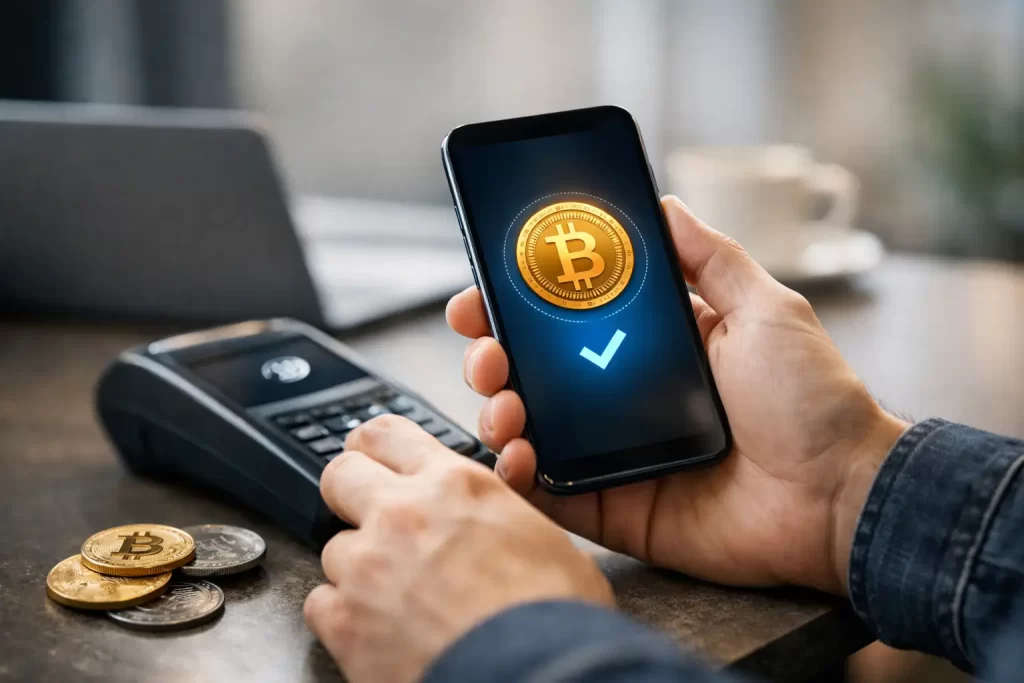
Table of Contents
What digital wallet crypto payments actually mean
At a basic level, digital wallet crypto payments let you spend crypto through familiar payment rails instead of relying on a merchant to accept crypto directly. That distinction matters. Most people are not looking for a checkout page with five chains, token options, gas fees, and confirmation delays. They want their balance to work in the real world with the same speed and confidence they expect from a debit card or mobile wallet.
In practice, that usually means you hold supported crypto in an account, the platform converts it into fiat at the point of purchase, and the merchant gets paid in the local currency they already accept. For the user, the experience feels normal. Tap your phone. Swipe your card. Complete the purchase. Behind the scenes, the hard part is handled for you.
That is why stablecoins matter so much here. If your goal is everyday spending, price stability beats speculation. USDT and USDC are useful because they keep the value proposition simple. You know roughly what you can spend, and you are not trying to time the market while standing at a checkout counter.
Why stablecoins are driving digital wallet crypto payments
The real winner in crypto payments is not the asset with the loudest headlines. It is the asset that creates the least friction. Stablecoins do that better than most alternatives because they remove one of the biggest barriers to spending crypto in daily life – volatility.
If you are a freelancer paid in stablecoins, a remote worker moving across borders, or a frequent traveler tired of slow bank transfers and messy exchange processes, predictable value matters. You want to know that your transportation budget is still your transportation budget tomorrow. That makes stablecoins a practical payments tool, not just a settlement layer.
This is also why the strongest platforms are built around immediate utility. Users do not want to move funds to an exchange, sell manually, wait for a bank transfer, and then spend. They want instant access. A well-built crypto payment wallet makes that possible by turning held balances into usable purchasing power in real time.
Where most crypto payment experiences still fall short
A lot of products promise spending freedom, but the details decide whether the experience is useful or frustrating. The first issue is acceptance. If a payment method only works with a narrow set of merchants, it is not a spending solution. It is a workaround.
The second issue is speed. Delays kill confidence. If users cannot trust a payment to go through quickly, they keep a backup bank card in reach and the crypto product becomes secondary.
The third issue is security. This is the non-negotiable one. People are willing to try new payment tools, but they are not willing to risk their funds on weak controls. Crypto users are especially alert to wallet compromise, transaction fraud, and compliance issues. If a platform cannot explain how it screens wallet activity, protects stored balances, and reduces exposure to risky counterparties, it is asking users to take on too much uncertainty.
Then there is the onboarding problem. If setup feels like opening an institutional trading account, mainstream adoption stalls. People want quick sign-up, clear funding steps, transparent fees, and a spending experience that feels familiar from day one.
What a good digital wallet crypto payments setup should include
The best products make crypto spendable without hiding the parts that matter. Convenience gets attention, but trust closes the gap between interest and actual use.
Real-time conversion is one of the core features. It allows users to keep value in stablecoins and spend in fiat when needed, without preloading a separate balance or manually off-ramping each time. That single step changes crypto from something you hold to something you can actually live on.
Broad acceptance matters just as much. If your card or wallet works anywhere traditional card payments are accepted, crypto becomes useful for daily expenses instead of occasional exceptions. Mobile wallet compatibility also matters more than many providers admit. Being able to add a card to Apple Pay or Google Pay turns crypto spending into a tap-and-go experience people already trust.
Security should be built into the product, not bolted on after launch. That includes multi-factor authentication, multi-signature wallet controls, and wallet address risk screening that can identify sanctions exposure, mixer interaction, darknet risk, and other illicit signals before they become a problem. These controls are not just good compliance hygiene. They are a practical layer of protection for users who want financial freedom without blind risk.
Transparency matters too. Fees do not need to be zero to be acceptable. They need to be understandable. Users can handle a clear pricing model. What they reject is surprise costs hidden inside a conversion flow or card program terms.
Digital wallet crypto payments for travel, remote work, and daily spending
This category gets more valuable the more global your life becomes. If you earn in stablecoins, travel often, or work across borders, every extra step between your funds and your actual spending becomes a drag on your time.
A useful setup lets you pay for everyday purchases, book hotels, cover transit, subscribe to software, and withdraw local cash if needed. It reduces dependency on legacy banking rails that often move slower than your work and your travel plans. It also gives you one spending layer that can move with you across countries instead of forcing repeated conversions and account juggling.
That is why card-based crypto spending has become so compelling. It meets users where they already are. No need to convince every merchant to accept crypto directly. No need to teach every customer a new payment behavior. The infrastructure adapts crypto to the way people already pay.
For users who care about speed, access, and control, that is a much stronger proposition than waiting for broad direct merchant acceptance that may still be years away in many categories.
The trust question behind every crypto wallet payment product
Adoption does not depend on hype anymore. It depends on whether the product answers the trust question clearly.
Can I use it quickly? Can I use it globally? Can I trust the security model? Can I understand what happens to my funds at the moment of purchase?
The strongest platforms answer yes with specifics. They talk about how transactions are protected, how risky wallet activity is screened, how user access is secured, and how spending works in real time. That level of clarity matters because crypto users are not just buying convenience. They are evaluating counterparty risk every time they move funds into a platform.
This is where a security-forward product stands out. A platform like KazePay makes the value proposition clearer because it connects instant spending with concrete protection measures instead of treating security as background copy. That is the standard this market needs more of.
What comes next for digital wallet crypto payments
The next phase is not about making crypto more interesting. It is about making it more usable. The products that win will be the ones that turn stablecoin balances into everyday purchasing power with less friction, stronger controls, and wider acceptance.
For consumers, that means fewer manual conversions and more direct spending. For partners, it means white-label infrastructure that can launch branded card products without rebuilding the whole stack from scratch. For the market as a whole, it means crypto starts acting less like a separate financial world and more like a faster way to access your own money.
If you already live in stablecoins, the real question is no longer whether crypto can be spent. It is whether your payment setup is built to keep up with the way you already move.
Turn Stablecoins Into Spending Power
Holding crypto is easy. Using it should be too. KazePay turns USDT or USDC into practical spending power — so you can pay bills, book flights, cover subscriptions, or withdraw cash without manual off‑ramps or trading steps.
Fast access, real‑world acceptance, and strong security make daily crypto spending feel simple.