You load your card with USDT or USDC, tap to pay for coffee, and the transaction goes through like any other debit purchase. That leads to the real question: where are crypto debit cards accepted? For most people, the practical answer is simple – almost anywhere traditional card payments are accepted, as long as the merchant, payment network, and local rules allow it.
That sounds broad because it is. A crypto debit card is usually not asking a merchant to accept crypto directly. Instead, it converts your supported crypto balance into fiat at the point of sale, then processes the payment through the same card rails shoppers already use every day. To the merchant, it often looks like a normal card transaction. To you, it feels like spending crypto without the usual extra steps.
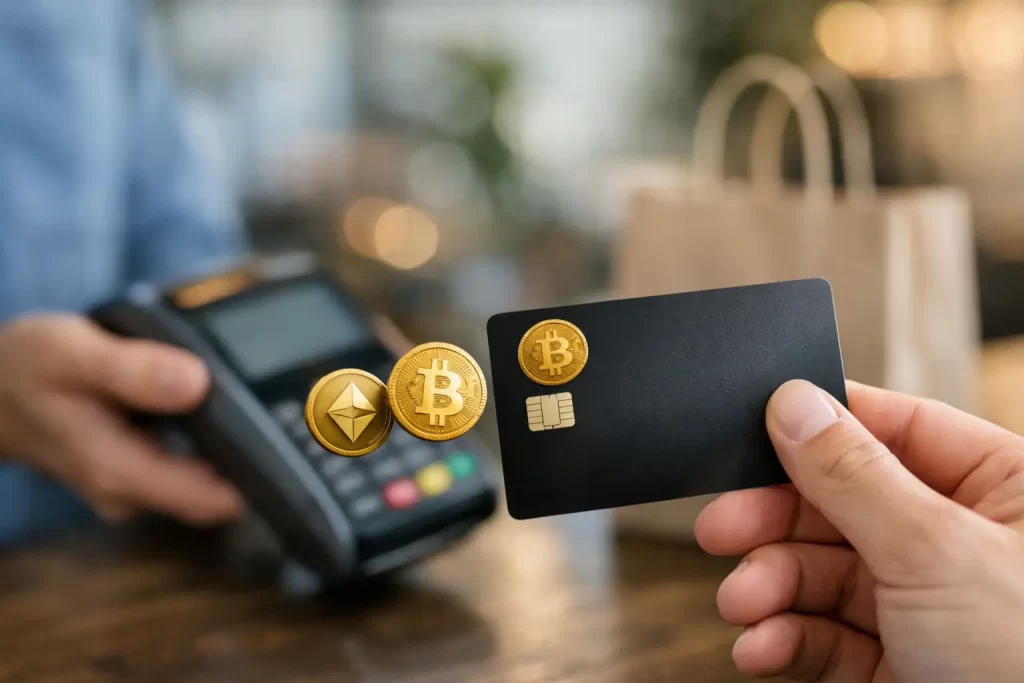
Table of Contents
Where are crypto debit cards accepted in practice?
In day-to-day use, crypto debit cards are accepted in three main places: online checkouts, physical stores, and ATMs. If a merchant accepts the card network tied to your card, there is a good chance your payment will work the same way any standard debit card would.
Online, that includes everything from retail sites and subscription platforms to travel bookings and food delivery apps. If the checkout page accepts card payments and your issuer allows that merchant type, a crypto debit card can usually be used there. For users who keep balances in stablecoins and want to pay bills or shop fast, this is often the easiest way to turn digital assets into real purchasing power.
In stores, acceptance is just as familiar. Grocery chains, restaurants, gas stations, pharmacies, electronics stores, and hotels generally process these cards through the same terminals they use for every other debit or prepaid card. If your card supports contactless payments or mobile wallet use through Apple Pay or Google Pay, your crypto balance can follow you into the same tap-to-pay flow you already use.
ATMs are another common use case, though this one depends more on your issuer, region, and fees. Many crypto debit cards allow cash withdrawals, which can be useful when a business is cash-only or you are traveling in a market where card acceptance is less consistent. The main trade-off is cost. ATM operators can add their own fees, and your card program may have separate withdrawal limits or charges.
Why merchant acceptance is usually broad
The reason crypto debit cards can work in so many places is that they sit on top of existing payment infrastructure. The merchant does not need a crypto wallet, a blockchain integration, or a special checkout plugin. They just need to accept card payments on the network your card uses.
That difference matters. There is a big gap between a merchant accepting crypto directly and a merchant accepting a crypto-funded debit card. Direct crypto acceptance is still niche in many markets. Card acceptance is mainstream. That is why a crypto-to-fiat card is often the fastest path to everyday spending.
For people who are paid in stablecoins, hold treasury funds in digital dollars, or simply want to avoid manual off-ramping before every purchase, this model removes friction. You do not need to transfer funds to an exchange, sell, wait, withdraw, and then spend. The conversion happens in real time at checkout.
The places where acceptance can break down
Broad acceptance does not mean universal acceptance. There are several cases where a crypto debit card may not work, even if a business usually takes debit cards.
One issue is merchant category restrictions. Some issuers block certain transaction types based on compliance rules, fraud risk, or network policies. That can include gambling, adult services, sanctioned regions, or high-risk financial transactions. If a merchant falls into a restricted category, your payment may be declined even though the terminal itself accepts cards.
Another issue is preauthorization. Hotels, rental car companies, and gas stations sometimes place temporary holds that exceed the final purchase amount. A card may work there, but you need enough available balance to cover the hold. This catches people off guard because the transaction is not just the posted price – it can be a larger temporary amount until the merchant settles the charge.
Geography also matters. A card advertised as global may still have country-specific limits based on local regulation, sanctions screening, or network coverage. That is why strong compliance controls are not just back-office details. They directly affect where and how reliably a card can be used.
Where are crypto debit cards accepted for travel?
Travel is one of the strongest use cases because acceptance usually follows the same rules as any international debit card. If a hotel, airline, café, transit kiosk, or local retailer takes card payments, a crypto debit card can often be used there too. That gives frequent travelers and digital nomads a practical way to spend stablecoins without moving money through multiple banking layers first.
Still, travel is where small frictions become obvious. Some countries lean heavily on chip-and-PIN. Others favor mobile wallets. Some merchants do not accept foreign-issued cards for certain transactions, and some transit systems have quirks around contactless authorization. None of this is unique to crypto cards, but it is worth expecting.
If you travel often, the strongest setup is a card that supports broad international coverage, mobile wallet compatibility, transparent foreign transaction terms, and security controls that do not lock you out when your location changes. A global-first product like KazePay is built around that reality, pairing worldwide card usability with risk screening, multi-sig protections, and multi-factor security so spending stays fast without getting loose on compliance.
Online acceptance is wide, but checkout behavior matters
People often assume online acceptance is either yes or no. It is more nuanced than that. A crypto debit card may work perfectly for ecommerce and still fail on a recurring subscription, a cross-border digital service, or a merchant with aggressive fraud filters.
This happens because online merchants score risk differently. Billing address mismatches, unusual geography, virtual card usage, or repeated small authorizations can trigger declines. If you are using a virtual card, that can actually be an advantage for security, but some merchants still have older fraud systems that treat anything unfamiliar as suspicious.
The upside is speed. For remote workers, freelancers, and globally mobile users, paying software subscriptions, booking flights, buying gear, and covering day-to-day online purchases from a stablecoin balance is a real quality-of-life improvement. It turns crypto from stored value into usable money.
What determines whether your card works smoothly
Acceptance starts with the merchant, but reliability starts with the issuer. The best crypto debit card experience comes from a provider that handles conversion, compliance, and security in a way that feels invisible when everything is working.
Real-time conversion matters because pricing and balance availability need to be clear at the moment you pay. Security matters because any spending product linked to crypto balances needs stronger controls than a basic prepaid card. Multi-factor authentication, wallet screening, and transaction monitoring reduce the chance that convenience turns into exposure.
Compliance matters just as much. Some users hear that word and think friction. In reality, compliance is one reason broad card acceptance is possible in the first place. If the program screens wallet risk, blocks sanctioned activity, and follows issuing rules closely, it is better positioned to maintain reliable access across regions and merchant categories.
So, where are crypto debit cards accepted?
The honest answer is this: they are accepted in most of the same places you already use a normal debit card – online stores, retail checkouts, restaurants, travel merchants, and many ATMs – because they rely on traditional card networks, not direct merchant crypto adoption.
The more useful answer is that acceptance depends on context. Your card may work almost everywhere you shop and still hit limits with restricted merchants, temporary holds, certain international edge cases, or ATM fees. That is normal. What matters is choosing a card built for real spending, not just crypto branding.
If your goal is simple, fast access to stablecoin balances in the real world, crypto debit cards are already past the novelty stage. They are a payments tool. And the best ones make that feel exactly how it should – instant, secure, and ready when you need to pay.
Spend Stablecoins Where Cards Already Work
You don’t need merchants to accept crypto directly. KazePay converts your USDT or USDC at checkout and processes payments through the same card rails shoppers already use — so you can spend almost anywhere traditional cards are accepted.
Coffee, shopping, travel, subscriptions: if the card works there, your stablecoins can too.
👉 Sign up for KazePay and use stablecoins in the places you already spend.