You do not need to stand at a checkout line explaining blockchain to a cashier. If you want to know how to pay with stablecoins in stores, the short answer is simple: use a crypto-linked card that converts your USDT or USDC into local currency at the moment you pay. For most people, that is the fastest path from holding stablecoins to buying groceries, coffee, train tickets, or a hotel stay in the real world.
That matters because stablecoins are no longer just a parking place between trades. For remote workers, frequent travelers, freelancers, and crypto-native users, they are often the actual cash balance. The friction starts when everyday spending still expects card rails and fiat settlement. The good news is that you no longer need to manually off-ramp, wait on exchange withdrawals, or move funds through multiple accounts just to make a normal purchase.
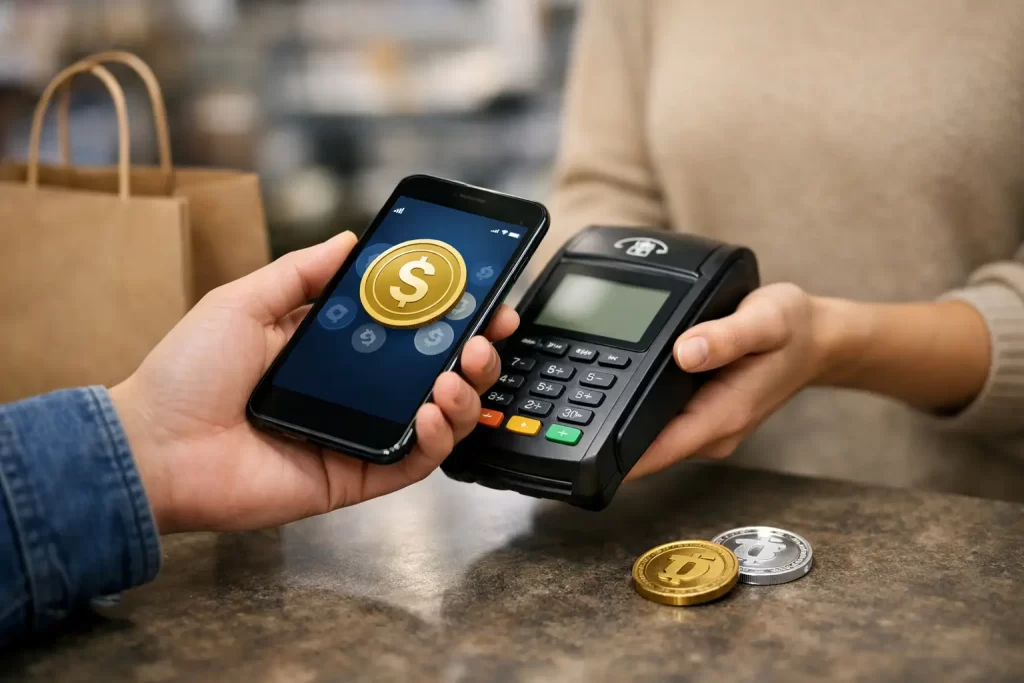
Table of Contents
How to pay with stablecoins in stores without friction
The most practical method is a debit card connected to your stablecoin balance. At the point of sale, the card network handles the merchant side in fiat, while your provider handles the crypto-to-fiat conversion in real time. To the store, it looks like a standard card transaction. To you, it feels like spending the value you already hold in USDC or USDT.
This setup is what makes stablecoin spending usable in ordinary retail settings. Most stores are not set up to accept direct on-chain payments, and even when a merchant says they take crypto, that can mean extra hardware, QR code flows, price volatility concerns, or staff confusion. A card solves that by using the payment infrastructure merchants already trust.
If you are using a provider like KazePay, the experience is built around speed and control: fund your balance, add the card to Apple Pay or Google Pay if you want tap-to-pay, and spend anywhere traditional card payments are accepted. The merchant gets paid in fiat. You keep the convenience of holding stablecoins until the moment you spend.
What you need before you try it
First, you need supported stablecoins in your wallet or account balance. For most retail spending products, that usually means USDT or USDC. The exact networks supported can vary, so this is one detail worth checking before you transfer funds. Fast spending starts with funding the right asset on the right chain.
Second, you need a card product that is actually designed for point-of-sale use. Not every crypto app is. Some platforms let you buy and sell, but they are weak on everyday payments. Others offer cards but make conversion clunky or bury the fees. Look for a card that gives you clear balance visibility, real-time transaction tracking, mobile wallet support, and transparent spending terms.
Third, you need a security setup that treats payments like payments, not like an afterthought. Stablecoin spending only works as a daily habit if you trust the rails behind it. Multi-factor authentication, multi-signature wallet controls, and wallet address risk screening are not marketing extras. They are part of what lowers fraud risk and compliance exposure while keeping access fast.
How the in-store payment flow actually works
Once your account is funded and your card is active, the process is familiar. You tap, insert, or swipe your card at checkout. If you added it to Apple Pay or Google Pay, you can pay with your phone just like any other debit card. The merchant requests payment in local currency. Your provider converts the required amount from your stablecoin balance in real time and completes the authorization.
For the cashier, there is nothing special happening. That is the point. Good stablecoin spending tools fit into existing card networks instead of asking merchants to change behavior.
From your side, you will usually see the transaction show up immediately in your app, along with the amount spent and the remaining balance. That real-time feedback is useful, especially if you travel often or spend across multiple currencies. It keeps stablecoin spending grounded in the same budgeting habits people already use with fiat cards.
Where people get stuck
The biggest misunderstanding is thinking any crypto wallet is enough. It is not. A self-custody wallet can store stablecoins, but that alone does not make it a retail payments tool. You still need a way to bridge your crypto balance to the merchant’s fiat settlement flow.
Another common issue is assuming direct merchant crypto acceptance is the better option. Sometimes it is. If a merchant truly supports stablecoin payments and you are comfortable with the process, that can work well. But for routine purchases, card-based spending is usually faster, more widely accepted, and far less awkward in busy retail environments.
Fees are another area where details matter. Some providers charge issuance fees, monthly platform fees, FX spreads, ATM fees, or conversion markups. None of that automatically makes a product bad. It just means you should compare the total cost of actually using it, not just the headline promise. A low-fee product with weak acceptance or poor security can cost you more in practice.
How to choose the right setup for store payments
If your goal is everyday spending, acceptance should come first. A card that works across a broad merchant network will beat a niche crypto payment method almost every time. That is especially true for travelers and globally mobile users who need reliability in different countries, currencies, and payment environments.
Speed is next. You should not need to pre-sell assets manually every time you want to buy lunch. Real-time conversion is the feature that makes stablecoins feel spendable, not theoretical. When it works well, there is almost no decision fatigue at checkout.
Security should be visible, not vague. If a provider cannot clearly explain how it screens wallet risk, protects funds, and prevents unauthorized access, that is a red flag. Stablecoin holders are right to expect more than a basic login screen. Payments products need strong controls because they are designed for frequent use, and frequent use creates more opportunities for abuse if protections are weak.
Direct crypto payments vs crypto cards
If you are comparing methods for how to pay with stablecoins in stores, the real choice is often between direct crypto acceptance and a crypto-funded card. Direct payments can be useful in crypto-friendly environments, but they depend on merchant support and often create a less familiar checkout experience. They may also involve network fees, confirmation timing, or pricing questions if a merchant’s integration is not polished.
A crypto card is less pure from a blockchain-first perspective, but more practical from a spending perspective. It converts your crypto into a payment format stores already accept. That trade-off is why card-based stablecoin spending is becoming the default for real-world use. You get the flexibility of holding stablecoins and the reach of existing payment rails.
Everyday examples that make sense
For a freelancer paid in USDC, a crypto-linked card can turn incoming client payments into spendable purchasing power without multiple banking steps. For a traveler, it can reduce the need to juggle exchange desks, local accounts, and prepaid travel cards. For someone who already treats stablecoins as their working cash balance, it can make rent-adjacent expenses, transportation, dining, and shopping feel much more direct.
That said, it depends on your spending habits. If most of your life still runs through a traditional bank and payroll account, stablecoin cards may be a secondary tool rather than your primary one. If you are already operating globally and keeping a meaningful share of your funds in USDT or USDC, the value is much more immediate.
The practical mindset to bring to it
The smartest way to start is not to move your entire financial life on day one. Fund a moderate balance, test it with normal purchases, and see how the transaction flow feels. Check authorization speed, app visibility, support quality, and fee clarity. A good product should make your first store purchase feel ordinary, not experimental.
That is the real benchmark. Stablecoin spending succeeds when it stops feeling like a crypto trick and starts feeling like a better way to access your money. If your card is accepted where you shop, your funds convert in real time, and your account is protected by serious security controls, paying in stores becomes less about crypto and more about convenience.
The future of retail payments will not be decided by who talks about blockchain the most. It will be decided by who makes spending instant, secure, and accepted worldwide – with the least friction between your balance and the checkout terminal.
Pay In‑Store With Stablecoins, No Explanation Needed
You shouldn’t have to teach a cashier how crypto works. KazePay lets you spend USDT or USDC in stores through a crypto‑linked card that converts to local currency at checkout — so the merchant sees a normal card payment.
Groceries, coffee, train tickets, hotels: tap, pay, move on.
👉 Sign up for KazePay and use stablecoins anywhere cards are accepted.