You load up a stablecoin card, find an ATM, and expect cash in seconds. Then the machine declines the transaction. That is usually the moment people ask, does a stablecoin card work at all ATMs? The short answer is no – not all ATMs, not all the time, and not under every card setup. But a well-issued stablecoin card can work at a very large number of ATMs if the card network, region, machine settings, and compliance checks all line up.
That distinction matters because stablecoin cards are built to make spending simple, not magical. They bridge crypto balances and traditional payment rails in real time. When that bridge is set up correctly, cash withdrawal feels as familiar as using any standard debit card. When one part of the chain is restricted, the ATM transaction can fail even if your wallet balance looks fine.
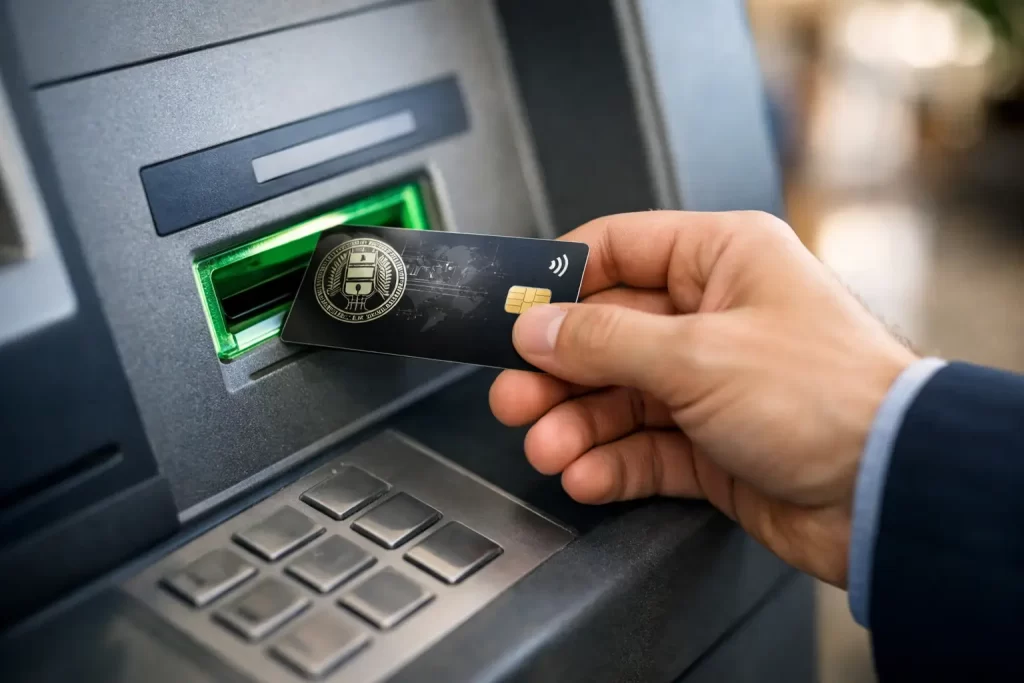
Table of Contents
Does a stablecoin card work at all ATMs or only some?
A stablecoin card does not work at every ATM on earth just because it holds USDT or USDC. What matters is whether the card is issued on a payment network that the ATM accepts, whether ATM withdrawals are enabled on the card program, and whether the local machine supports that kind of debit transaction.
In practice, most stablecoin cards convert your crypto balance into fiat at the point of use. The ATM is not reading blockchain assets directly. It is reading a card credential, checking the network, verifying authorization, and asking the issuing system whether the withdrawal should be approved. So the real question is less about stablecoins and more about card infrastructure.
That is why two cards funded by the same stablecoin can behave differently. One issuer may allow ATM withdrawals across a broad set of countries. Another may restrict cash access entirely or only permit it in certain markets. A user can have enough USDC in their account and still get declined because the specific ATM, network route, or compliance rule does not allow the transaction.
What determines whether an ATM withdrawal works
The first factor is the card network. If your stablecoin card runs on a major network with global ATM acceptance, your odds improve immediately. If the ATM does not support that network, the withdrawal will not start, no matter how much balance you hold.
The second factor is issuer permissions. Some crypto cards are designed mainly for purchases and online spending. Others support both point-of-sale use and ATM withdrawals. This is a product-level setting, not something the ATM decides for you.
The third factor is geography. ATM support can vary by country, bank, and local acquiring partner. A card that works in one city may fail in another because of regional restrictions, unsupported transaction types, or local fraud controls.
Then there is compliance and risk monitoring. This is where serious card programs separate themselves from weaker ones. A stablecoin-funded card operates inside regulated payment rails, so screening and transaction monitoring are part of the system. If an account, wallet source, or withdrawal pattern triggers a risk rule, the issuer may block the cash-out attempt. That can feel frustrating in the moment, but it is also part of what protects the card ecosystem from abuse.
Finally, there are practical limits such as daily withdrawal caps, ATM operator cash limits, foreign transaction settings, and fee structures. Sometimes the card works, but not for the amount you requested.
Why a stablecoin card gets declined at an ATM
A decline is not always a red flag. Often it is a routine mismatch between the card and the machine.
One common issue is insufficient available balance after conversion and fees. You may see $300 worth of stablecoins in your app, but the ATM request could require enough room for the withdrawal amount, the issuer fee, the ATM surcharge, and any FX spread if local currency is involved.
Another issue is PIN or chip compatibility. Some ATMs are picky. Others may require a transaction route your card program does not support. International machines are especially inconsistent, and older ATMs can be more limited than they look.
There is also the possibility of card controls. If cash withdrawals are turned off in your app, if 2FA steps are incomplete, or if your account is still pending verification, the system may reject the transaction before it reaches approval. Security-forward issuers do this on purpose. Fast access matters, but controlled access matters more.
How stablecoin-to-cash actually works
The ATM does not dispense USDT or USDC. It dispenses local fiat currency. Your card issuer handles the conversion path in the background.
That usually means your available stablecoin balance is checked, the transaction is authorized in fiat terms, and the required amount is converted at the moment of withdrawal. If approved, the machine releases cash just like it would for a regular debit card.
This is what makes stablecoin cards useful for travelers, remote workers, and anyone living across currencies. You do not need to manually sell crypto, wait on a bank transfer, or preload separate fiat balances every time you need cash. The conversion is built into the card experience.
The trade-off is that the experience depends on the quality of the issuer stack. Real-time conversion is only as good as the authorization logic, risk controls, liquidity handling, and network reach behind it.
Does a stablecoin card work at all ATMs when traveling?
Travel is where stablecoin cards can feel especially powerful and especially inconsistent.
If you are moving across borders, the card may work perfectly at merchants and still fail at certain ATMs. That does not mean the card is broken. It usually means the local ATM operator, the acquiring bank, or the machine itself is applying a rule your card cannot satisfy.
Some machines reject prepaid-style debit products. Some add aggressive surcharges. Some only work reliably with domestic bank cards. And some will offer dynamic currency conversion on-screen, which can lead to poor exchange outcomes if you accept the ATM’s terms instead of letting the card network handle the conversion.
For frequent travelers, the smartest approach is simple. Use ATMs tied to established banks, withdraw reasonable amounts instead of pushing the machine limit, decline unnecessary conversion offers, and make sure your card app shows international cash access is enabled.
What to check before using a stablecoin card at an ATM
Before you walk up to a machine, confirm the basics. Make sure ATM withdrawals are supported by your card program. Check your available balance, not just your total holdings. Review daily cash limits and any regional restrictions.
It also helps to verify your account status. Full identity verification, a current phone number, and active security settings can prevent avoidable declines. If your issuer takes security seriously, expect controls like multi-factor authentication, transaction alerts, and source-of-funds screening to be part of the experience.
That is not friction for the sake of friction. It is what allows a crypto-backed card product to stay usable at scale while protecting users from fraud, compromised wallets, and risky activity patterns.
The difference between a good card program and a weak one
A lot of people judge stablecoin cards by one bad ATM experience. That is understandable, but it misses the bigger picture.
A strong card program is not just a piece of plastic connected to crypto. It is a full payments system with issuing relationships, conversion logic, compliance workflows, fraud controls, and global acceptance strategy. If any of those layers are weak, the user feels it at the ATM first.
The best experience comes from a card platform built for real-world spending, not just crypto branding. That means broad merchant and ATM reach, real-time conversion, transparent fees, and serious protection around wallet screening, multi-sig controls, and 2FA. KazePay is built around that exact standard, which is why the product is designed to make stablecoin spending feel immediate while still staying disciplined on security and compliance.
So, does a stablecoin card work at all ATMs? No. But the better question is whether your card is built to work at most of the ATMs you are actually likely to use. If the answer is yes, then stablecoins stop being something you only hold and start becoming money you can move, spend, and access when it counts.
Withdraw Cash Where It Actually Works
Stablecoin cards aren’t magic — they rely on real ATM networks. KazePay is issued to work across widely supported ATM rails, with clear withdrawal rules, visible limits, and real‑time checks so your USDT or USDC can turn into cash when conditions line up.
Know what to expect before you insert your card.
👉 Sign up for KazePay and access cash from stablecoins with fewer ATM surprises.