You’re at an ATM in a new city, your bank card is buried in a frozen app, and your crypto balance is sitting there in USDT. The question gets very real, very fast: can I withdraw cash using USDT card? In many cases, yes – but the short answer only helps if you also understand how the conversion works, where it works, and what can block the transaction.
A USDT card is built to make stablecoin spending feel like normal card spending. Instead of manually selling crypto, moving funds to a bank, and waiting, the card program typically converts your supported balance into local fiat at the moment you pay or withdraw. That means the ATM does not hand you USDT. It hands you dollars, euros, pesos, or whatever local currency the machine supports, while your card provider handles the crypto-to-fiat side in real time.
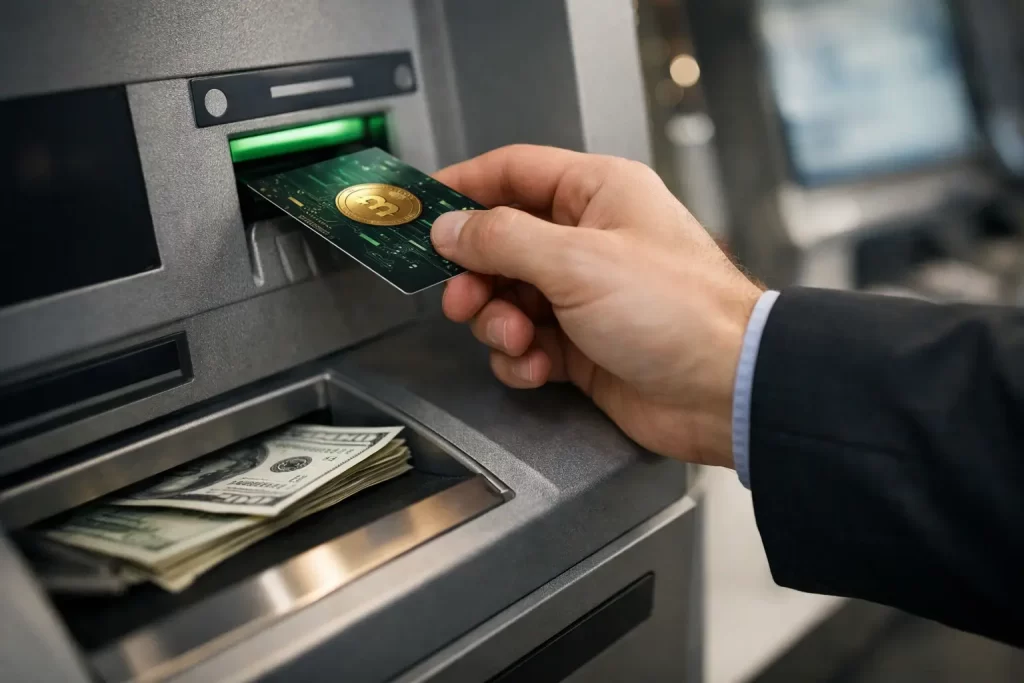
Table of Contents
Can I withdraw cash using USDT card at any ATM?
Not every ATM, and not every card, but many do support it.
The key detail is that a USDT card is not really asking the ATM to process crypto. It is asking the ATM to process a card transaction through traditional payment rails. If your card issuer supports ATM withdrawals and the machine accepts that card network, you can usually withdraw local cash just like you would with a standard debit card.
That said, approval depends on a few moving parts. Your card has to be active for cash withdrawals, your available USDT balance must cover the withdrawal plus fees, the ATM has to accept the card network, and your account may need identity verification completed before ATM access is enabled. Geography matters too. Some regions are more crypto-friendly than others, and local banking rules can affect whether certain ATMs work reliably.
How a USDT cash withdrawal actually works
From the user side, it looks simple. You insert or tap the card, enter your PIN, choose an amount, and wait for the machine to count bills. Behind the scenes, a few things happen almost instantly.
First, the ATM sends an authorization request through the card network. Then your card platform checks your balance, verifies that your card can be used for cash access, and calculates the fiat amount needed for the withdrawal. At that point, the system converts enough USDT to cover the request, along with any applicable fees. If everything checks out, the withdrawal is approved.
This structure is why stablecoin cards are attractive to travelers, freelancers, and remote workers. You keep value in USDT, but you can still access local currency when card-only spending is not enough. It cuts out several steps compared with using an exchange and a bank account as the middle layer.
What you need before trying to withdraw
A lot of failed ATM attempts come down to setup, not balance.
Your card issuer may require full identity verification before allowing cash withdrawals. You may also need a physical card, since mobile wallets are great for purchases but usually not useful at a traditional ATM unless the machine supports contactless card access. Your PIN must be set correctly, and your account may have daily or per-transaction cash limits.
You should also check whether your provider supports USDT directly for funding. Some cards support multiple stablecoins but prioritize one balance over another. Others may require you to preload a card wallet first rather than pull directly from your available crypto balance at the time of the transaction.
Security checks can also affect access. Strong providers screen wallet activity for sanctions exposure, mixer history, and other risk signals before allowing funds into the spendable environment. That may feel strict, but it protects the card ecosystem and reduces the chance of blocked funds later, especially when compliance rules tighten without warning.
Fees can change the math quickly
If your goal is convenience, a USDT card can be a strong option. If your goal is the absolute cheapest way to get cash every time, it depends.
There are usually several fee layers to consider. The card issuer may charge an ATM withdrawal fee. The ATM operator may add its own surcharge. If you are withdrawing in a currency different from your account’s default settlement currency, there may be a conversion spread or network-related foreign transaction cost built into the exchange rate. Even when USDT itself stays stable, the total cost of accessing paper cash can vary more than users expect.
This is where transparency matters. A good card platform shows fees clearly before or during use, or at minimum makes them easy to verify in the account dashboard. Hidden costs ruin the whole point of fast access.
Where people get tripped up
The most common misunderstanding is assuming that because a card works for purchases, it will automatically work for ATM withdrawals. That is not always true.
Some programs issue virtual cards for online or mobile wallet spending only. Those can be excellent for subscriptions, retail purchases, and travel bookings, but useless at a cash machine. Other cards allow ATM withdrawals only after a physical card is activated and the user completes extra compliance checks.
Another issue is balance management. If your USDT balance looks sufficient for a $200 withdrawal, you might still get declined if the total authorization amount is higher once fees and cushions are applied. The same goes for daily withdrawal caps. A card can be fully funded and still reject a transaction that exceeds policy limits.
Then there is the ATM itself. Some machines are simply picky. One bank’s ATM may reject the transaction while the machine across the street approves it immediately. That does not always mean your card is the problem.
Can I withdraw cash using USDT card while traveling?
Yes, and this is one of the strongest use cases.
For globally mobile users, the appeal is obvious: hold stablecoins, spend or withdraw in local fiat, and skip the friction of moving money through multiple financial systems. If you’re landing in a country where your home bank charges aggressive foreign fees or flags every transaction, a well-supported USDT card can be a much faster path to usable cash.
Still, travel adds variables. Local ATM networks may have different limits. Some countries favor chip-and-PIN more heavily than tap access. Others have higher operator surcharges. You also want a provider with broad geographic acceptance and real-time account monitoring, so you can see transactions instantly and lock the card if anything looks off.
This is where a security-forward setup matters more than marketing copy. Multi-factor authentication, multi-signature wallet controls, and wallet risk screening are not abstract features. They reduce the chance that the balance behind your card gets compromised while you are moving between airports, coworking spaces, and unfamiliar networks.
When a USDT card makes more sense than manual off-ramping
Manual off-ramping still has a place. If you are moving large amounts and want to optimize every basis point, using an exchange and withdrawing to a bank can sometimes be cheaper. If you need a cash withdrawal right now, though, speed usually matters more than perfect fee efficiency.
That is the sweet spot for a USDT card. You get immediate spending utility from a stablecoin balance without breaking your workflow. For freelancers paid in USDT, digital nomads managing cross-border expenses, and crypto-native users who do not want every routine payment to become a treasury exercise, that convenience is worth a lot.
A strong product experience also reduces operational drag. Real-time conversion, app-based tracking, clear limits, and fast card controls turn crypto from a stored asset into usable money. That is the difference between holding stablecoins and actually living on them.
What to check before choosing a provider
If cash access matters to you, don’t judge a USDT card on branding alone. Check whether ATM withdrawals are enabled, whether a physical card is available, what countries are supported, how fees are disclosed, and how quickly the platform updates balances and transaction alerts.
Look closely at security and compliance, too. This part is easy to ignore until something goes wrong. A provider that screens risky wallet activity, uses multi-sig controls, and requires strong authentication is giving you more than friction. It is giving you a cleaner, more dependable path from crypto balance to real-world spending. That matters when your card is meant to replace pieces of your banking stack, not just sit in your drawer as a backup.
KazePay is built around that practical use case – spend supported stablecoins in real time, access broad global acceptance, and rely on controls designed for people who want speed without giving up protection.
If you’re asking whether a USDT card can get cash out of an ATM, the answer is often yes. The smarter question is whether your card program is built for that moment to work on the first try, wherever you happen to be.
Get Cash From USDT When You Need It
You don’t withdraw USDT from an ATM — you withdraw local cash. KazePay converts your USDT to fiat in real time, so ATMs dispense the currency they’re built for while your balance updates instantly.
Clear limits, broad network support, and predictable conversion help withdrawals work when it matters.
👉 Sign up for KazePay and withdraw cash from USDT with confidence.