A client payment lands in USDC at 9:12 AM. Rent is due, your software renewal hits at noon, and you still need groceries tonight. That gap between getting paid in crypto and actually using your money is exactly why a stablecoin card for freelancers paid in crypto has gone from nice-to-have to essential.
If you freelance across borders, work with crypto-native clients, or simply prefer getting paid in USDT or USDC, the real issue is not whether crypto payments work. They do. The issue is whether you can spend those funds as fast as your business moves. Waiting on exchange withdrawals, bank transfers, or manual off-ramping slows everything down. A card that converts stablecoins to fiat at the point of purchase changes that.
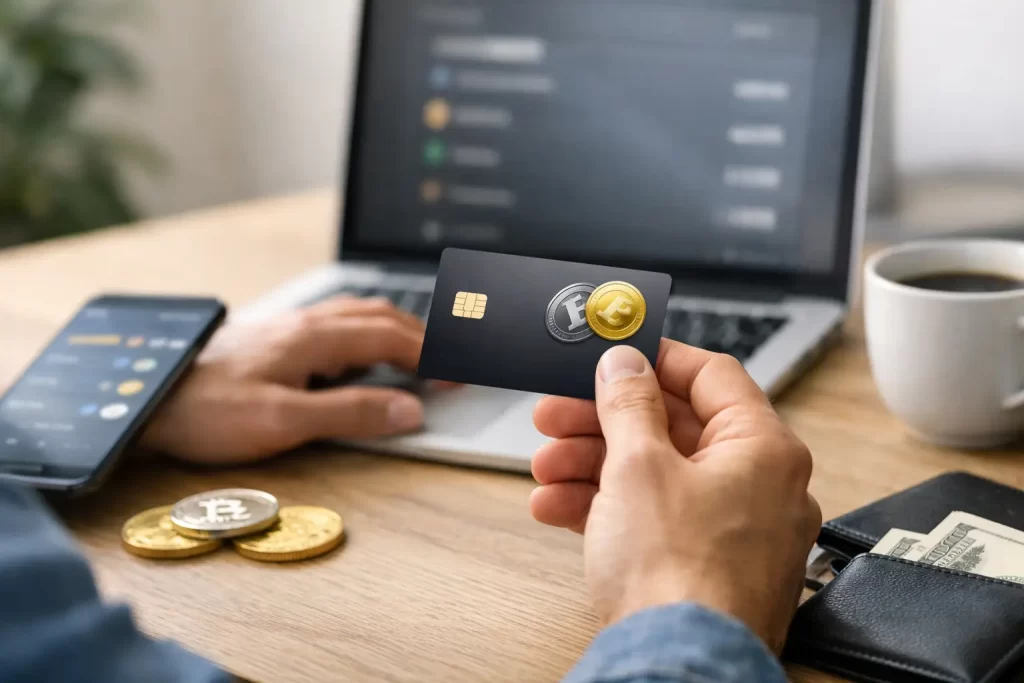
Table of Contents
Why freelancers need more than a crypto wallet
A wallet is great for storage. It is not a complete spending tool.
Freelancers do not just hold funds. They pay for subscriptions, book flights, cover client lunches, withdraw cash when traveling, and manage uneven income without wanting another layer of friction. If your income arrives in stablecoins, but your daily life still runs on card payments, your setup needs to bridge both worlds immediately.
That is where a stablecoin card stands out. Instead of manually moving funds to an exchange, converting them, withdrawing to a bank, and waiting, you can spend directly from supported stablecoin balances. For freelancers, that means less admin work and more control over timing.
That control matters more than most people admit. Cash flow is already unpredictable in freelance work. The last thing you need is a payment stack that turns available money into unavailable money for two business days.
How a stablecoin card for freelancers paid in crypto works
At a practical level, the model is simple. You hold supported stablecoins such as USDT or USDC. When you make a purchase, the card platform converts the required amount into fiat in real time so the merchant gets paid through traditional card rails.
To the merchant, it looks like a normal card transaction. To you, it feels like using a debit card funded by crypto rather than a bank balance.
That matters because it removes the manual off-ramp step. You do not need to pre-convert every time you expect to spend. You do not need to guess how much fiat you will need this week. You keep your working balance in stablecoins and spend when needed.
For freelancers who are often traveling or paying online vendors in different regions, this is a much cleaner setup. It aligns with how freelance income actually arrives and how real-world expenses actually happen.
Where the real value shows up day to day
The strongest case for a stablecoin card is not theoretical. It shows up in boring, frequent transactions.
Say you are a designer in Austin with clients in Berlin and Singapore. One pays in USDC, another in USDT. You need to renew Figma, pay for cloud storage, and book a last-minute hotel for a client workshop. With a standard crypto workflow, you would likely move funds through multiple platforms before any of that spending happens. With the right card, your spending can happen as soon as the payment clears.
That speed is not just convenient. It protects momentum. Freelancers operate on short cycles. Money that sits in transfer queues is money that cannot cover business expenses, taxes, or personal spending.
There is also a psychological advantage. When your crypto income feels spendable, it becomes easier to manage your finances like a real operating system rather than a workaround. That reduces the temptation to overcomplicate things with extra bank accounts, last-minute conversions, or fragmented balances across apps.
The trade-offs freelancers should understand
Not every stablecoin card is automatically the right fit. The product category solves a real problem, but the details matter.
First, stablecoins reduce volatility compared with other crypto assets, but they are not all equal. Most freelancers looking for spending utility should prefer widely used options like USDT and USDC because merchant-side conversion support and liquidity are stronger.
Second, fees can quietly shape the user experience. A card may save you time yet still become expensive if conversion spreads, ATM fees, inactivity fees, or foreign transaction costs are not transparent. Fast access matters, but so does knowing what each transaction actually costs.
Third, geographic coverage is not a small feature. Many freelancers live globally even if their business entity is US-based. If your card only works reliably in a narrow set of regions, it breaks the promise. Acceptance, ATM access, and mobile wallet compatibility all matter when you are moving between countries or relying on tap-to-pay.
Then there is the compliance side. This is where many users either pay close attention or none at all. They should pay attention. A card tied to crypto balances needs strong controls around wallet risk, fraud prevention, and account security. Fast spending is great. Fast spending with weak oversight is a liability.
What to look for in a stablecoin card
The best option for freelancers paid in crypto is not just the one that issues a card. It is the one built for actual payments.
Real-time conversion should be the baseline. If the process still forces manual preloading or delayed settlement, you are not getting the main benefit.
Security should also be visible, not vague. Risk screening for wallet activity, multi-signature controls, and multi-factor authentication are meaningful because they reduce exposure at the account and transaction level. In crypto payments, trust comes from architecture, not slogans.
You should also look for broad merchant acceptance and mobile wallet support. If a card works with Apple Pay or Google Pay, that removes one more point of friction from everyday use. For freelancers who live on their phones, that matters.
Transparent fees are another non-negotiable. You should know what happens when you spend, withdraw cash, or use the card internationally. Hidden charges kill adoption fast because freelancers notice every margin leak.
A global-first card experience is especially useful. If your clients, travel, and living arrangements cross borders, your payments tool should keep up. A card accepted worldwide is not just a convenience feature. It is a business continuity feature.
Security is part of usability
Freelancers tend to think about speed first, but security shapes usability more than people realize.
If a platform has weak controls, every payment comes with background anxiety. Can the wallet be compromised? Can suspicious funds create compliance issues? Can someone access the account if a device is lost? That friction is mental, but it is still friction.
A better setup makes protection part of the experience. Screening wallet addresses for sanctioned exposure, darknet links, mixers, and other high-risk signals creates a cleaner operating environment. Multi-sig controls and 2FA add another layer of certainty. You spend faster because you are not constantly second-guessing the foundation.
This is one area where a security-forward provider can make a real difference. KazePay, for example, positions the card experience around instant spending but backs it with concrete safeguards instead of generic promises. For freelancers handling cross-border income, that combination matters.
Who benefits most from this setup
A stablecoin card is especially strong for freelancers who already receive a meaningful share of income in crypto and want to shorten the distance between payment and use.
That includes developers working for Web3 teams, marketers billing international clients, creators paid by global communities, consultants traveling often, and digital nomads who do not want to route every dollar through slow bank processes. It also fits freelancers who simply want one cleaner system for online purchases, in-store spending, and cash access.
If you are still getting paid mostly through ACH and only occasionally receive crypto, the value may be lower. But if USDT or USDC is becoming part of your normal income flow, the card model starts making practical sense very quickly.
The bigger shift behind the product
Freelancers have been building borderless businesses for years. Payments are finally catching up.
The old model assumed your work could be global but your money still had to settle through local banking steps. That no longer matches how modern freelance income moves. A stablecoin card closes that gap by turning crypto compensation into direct spending power without making you stop and translate your money every time you need to use it.
That does not mean every freelancer should move all finances into stablecoins. It means your payment tools should match the way you already work. If your income arrives fast, your spending access should too.
The best financial setup is the one that removes drag without adding risk. For freelancers paid in crypto, that usually starts with making your earnings usable the moment they arrive.
Get Paid in Crypto, Spend It Today
Freelancers shouldn’t wait on banks to use their own money. KazePay lets you spend USDT or USDC the moment it hits your balance — rent, software, groceries, or travel — with conversion handled at checkout.
No exchange delays. No manual off‑ramps. Just real‑time access to your earnings.
👉 Sign up for KazePay and use stablecoins as fast as you earn them.