If you hold USDT, the slowest part of using it is usually not the payment – it’s the off-ramp. Log in to an exchange, sell, move funds, wait for settlement, then finally pay. That’s why the best ways to spend USDT without exchanges matter so much: they cut out extra steps and turn stablecoin balances into something you can actually use in real time.
For most people, this is not about theory. It’s about paying for a flight before prices jump, covering a hotel while traveling, buying software for work, or handling everyday spending without bouncing between wallets, trading screens, and bank accounts. The right method depends on where you spend, how often you transact, and how much control and security you want around your funds.
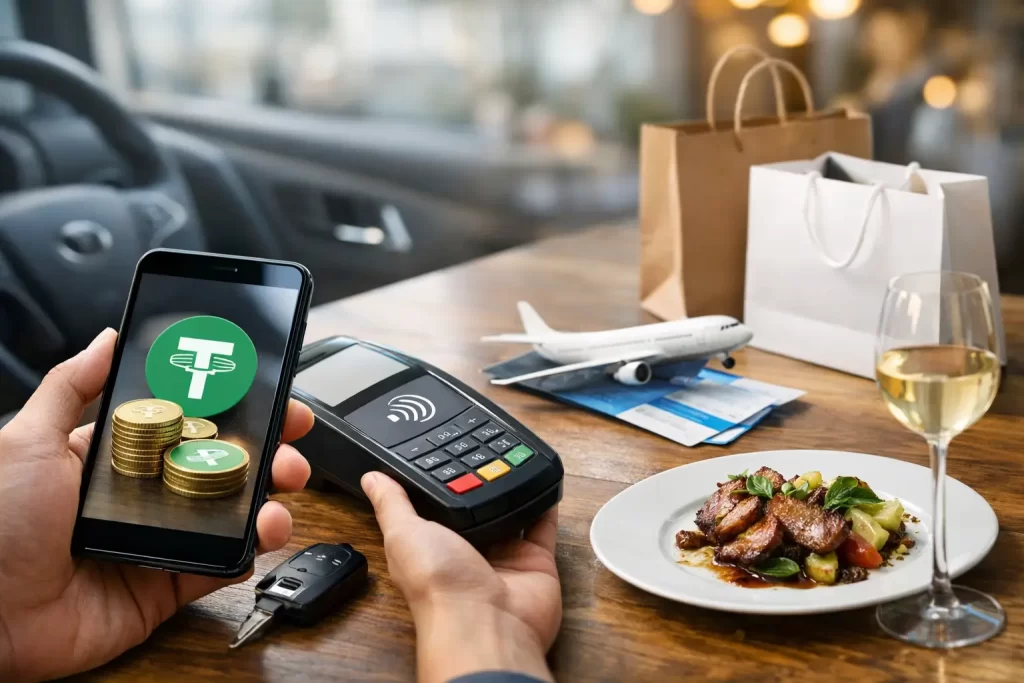
Table of Contents
Best ways to spend USDT without exchanges in daily life
The strongest option for everyday use is a crypto debit card that converts at the point of purchase. Instead of manually selling USDT on an exchange and moving fiat to a bank, you fund the card experience with supported crypto and spend anywhere normal card payments are accepted. That includes online checkouts, retail stores, subscriptions, and, in some cases, ATM withdrawals.
This route works well because it fits your existing habits. You tap your phone, use Apple Pay or Google Pay, enter your card details online, or swipe a physical card in store. From the merchant’s perspective, it looks like a standard card payment. From your perspective, you’re spending a stablecoin balance without handling the off-ramp yourself.
The trade-off is that not every crypto card is built the same. You want clear fees, broad merchant acceptance, and security controls that go beyond basic login protection. If a platform screens wallet risk, uses multi-signature controls, and supports multi-factor authentication, that is not marketing fluff – it directly reduces exposure in a category where users care about both fraud and compliance.
For people who spend regularly, this is usually the most practical answer because it turns USDT into a payment tool instead of a balance you have to constantly manage.
Using USDT for online shopping
Online purchases are one of the easiest places to spend USDT without exchanges, especially when card rails are involved. If your crypto-backed card provides virtual card details, you can pay for software, streaming subscriptions, e-commerce orders, food delivery, business tools, and travel bookings just like any other debit card.
This matters for freelancers, remote workers, and digital nomads who already hold earnings in stablecoins. If your income lands in USDT, there is no reason every purchase should trigger a separate exchange step. A direct spend model keeps cash flow moving. It also helps when timing matters. You can check out instantly instead of waiting for an exchange withdrawal or bank transfer.
There is one practical limitation: some merchants are stricter than others about prepaid or foreign-issued cards. That is less about crypto and more about card acceptance policies. In real-world use, broad network coverage matters more than flashy crypto branding.
Gift cards are simple, but narrower
Another common path is buying gift cards with USDT. This can work well if you already know the merchant you want to use. Retail, gaming, food, and entertainment gift cards are widely available in crypto-friendly marketplaces, and they can be useful when you want a fast, low-friction purchase.
The problem is flexibility. A gift card locks your value into one ecosystem. If plans change, your money is stuck in store credit. Some gift card marketplaces also add markups that make the convenience less attractive than it first appears.
That makes gift cards a decent backup option, not the best primary strategy. They are useful for one-off purchases, but they do not replace the freedom of spending USDT across many merchants worldwide.
Travel is one of the best use cases
Travel exposes every weakness in traditional money movement. Bank cards can trigger foreign transaction fees. Wires are slow. Exchange-based off-ramps feel even more painful when you are moving between countries. For globally mobile users, spending USDT directly through a card setup is often the cleanest option.
Flights, hotels, rideshares, dining, coworking spaces, and local shopping all become easier when your stablecoin balance can convert in real time at checkout. If ATM access is included, that adds another layer of flexibility for destinations where cash still matters.
This is also where acceptance footprint matters. A card product that works across a wide set of countries gives USDT practical reach, not just digital reach. For travelers, that difference is everything. Convenience is not only about speed. It is about knowing your funds are usable when you land.
Best ways to spend USDT without exchanges for bills and recurring costs
Recurring payments are where convenience compounds. If you can use USDT-backed card spending for software subscriptions, ad accounts, phone plans, cloud tools, and everyday household expenses, you remove a constant operational headache.
For self-employed users and small business operators, this can be a major upgrade. Many already receive part of their income in stablecoins. Paying recurring costs directly from that balance shortens the loop between earning and spending. You keep fewer idle funds trapped in transit, and you spend less time coordinating conversions.
Still, not every biller accepts card payments, and some charge extra for them. Rent, utilities, taxes, and certain loan payments may require ACH or direct bank transfers. In those cases, USDT spending without exchanges becomes harder unless the payment provider supports card funding in a cost-effective way. So while recurring digital services are a strong fit, larger bank-only bills may still need a different route.
Peer-to-peer spending can work, but trust is the variable
Some people spend USDT without exchanges by paying merchants, contractors, or friends directly wallet to wallet. If both sides are comfortable with crypto, this can be fast and efficient. There is no card network in the middle, no bank delay, and no need to sell first.
But this model depends heavily on counterparties. The other person has to want USDT, know how to handle it, and trust the transaction flow. It is great inside crypto-native circles and much less useful in normal retail life. It also shifts more responsibility to the user, especially around network selection, address accuracy, and irreversible transfers.
For that reason, direct wallet payments are powerful in the right context, but they are not the easiest universal answer for daily spending.
What actually makes a spending method the best?
The best option is not the one that sounds most crypto-native. It is the one that gives you fast access, broad acceptance, predictable costs, and strong protection. That usually means looking at four things.
First is usability. Can you pay online and in person without special merchant setup? Second is speed. Do funds become spendable immediately, or do you have to wait through manual conversion steps? Third is security. Features like wallet risk screening, multi-sig controls, and 2FA matter because spending should feel fast without feeling exposed. Fourth is geographic reach. If you travel or work across borders, local usability matters as much as app design.
This is where a payments-focused platform has a real edge over exchange-first workflows. Exchanges are built for trading. Spending is usually an extra layer. A product designed around real-time crypto-to-fiat card use starts from a different premise: your USDT should be ready for the next purchase, not trapped behind operational friction.
One example is KazePay, which is built around exactly that use case – secure crypto spending through virtual and physical cards with real-world acceptance, mobile wallet compatibility, and controls designed to protect users while keeping payments immediate.
The practical ranking
If the goal is everyday utility, crypto debit cards sit at the top because they combine acceptance, speed, and convenience. Travel spending comes next because it benefits heavily from real-time conversion and broad merchant reach. Online shopping and subscriptions are close behind for the same reason. Gift cards are useful, but limited. Direct wallet-to-wallet payments can be excellent in crypto-native settings, though they depend too much on the other side to rank as the best general solution.
The bigger point is simple: USDT becomes far more valuable when you can spend it directly. Not someday, not after a sale order clears, and not after a bank transfer finally shows up. The best spending setup is the one that makes your stablecoin balance feel as ready as cash while keeping security and compliance tight. That’s when holding USDT starts to feel less like parking funds and more like having real financial range.
Spend USDT Without Exchange Delays
USDT should be usable when you need it, not after a cash‑out process. KazePay lets you spend USDT directly through a card, with conversion handled at checkout so you can pay for flights, hotels, software, groceries, or ATM cash without routing funds through an exchange first.
Less waiting. Fewer steps. Real spending power.
👉 Sign up for KazePay and use USDT without manual off‑ramps.