You arrive late, the lobby is busy, and the front desk asks for a card for incidentals. That is the moment when the question gets real: can stablecoin cards be used for hotel deposits? Sometimes yes. Sometimes no. The difference usually comes down to how the hotel processes the hold, how your card converts stablecoins to fiat, and whether enough extra balance is available to cover more than the room rate.
For travelers who keep spending power in USDT or USDC, this matters more than almost any other checkout scenario. Hotel deposits are not simple purchases. They are temporary authorization holds, and those holds can be larger, slower to release, and more inconsistent than a normal card payment. If you use a stablecoin card, you need to think like both a traveler and a risk manager.
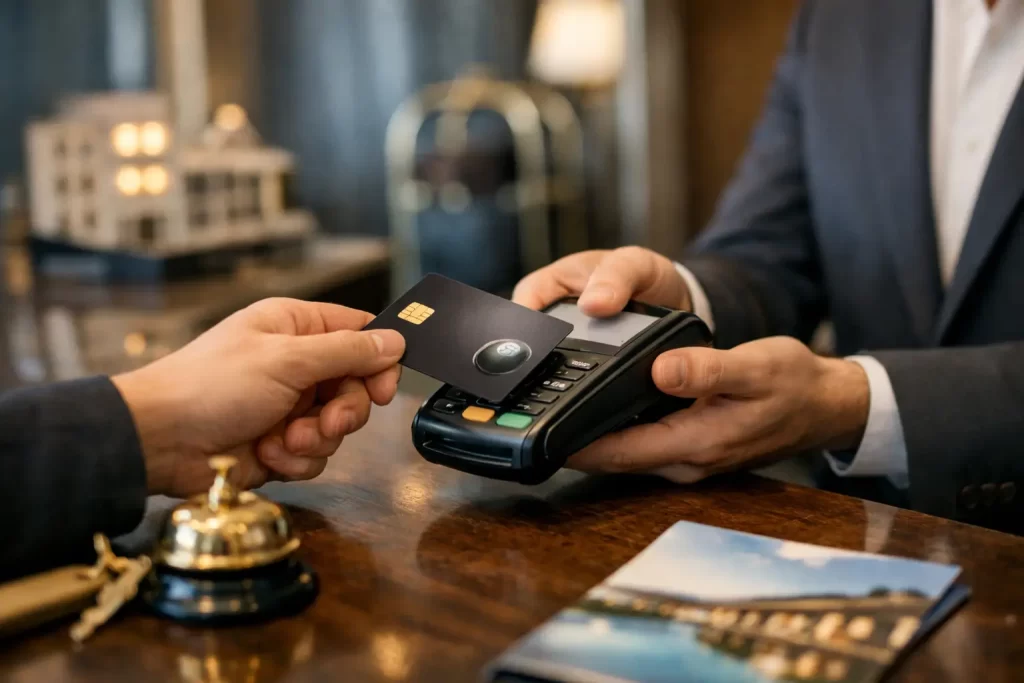
Table of Contents
Can stablecoin cards be used for hotel deposits in practice?
Yes, stablecoin cards can often be used for hotel deposits if the card runs on a major payment network and the hotel accepts it like a standard debit card. From the hotel’s point of view, the card terminal is usually not evaluating whether your funds originated in crypto. It is checking whether the authorization can be approved in local fiat.
That sounds simple, but hotel deposits are where edge cases show up fast. A hotel may place a hold for the full stay plus incidentals. A property might treat debit cards differently from credit cards. Some front desks will accept a debit-style card at check-in, while others will insist on a traditional credit card for security reasons, especially at higher-end properties or in markets with stricter policies.
So the real answer is not just yes or no. It is yes, if the hotel accepts your card type, the hold amount is available, and the issuer supports that type of merchant authorization without friction.
Why hotel deposits are different from ordinary card payments
A hotel deposit is usually a pre-authorization hold, not a final settled charge. The hotel reserves a certain amount to cover the room, taxes, and possible extras like minibar purchases, damage, smoking fees, parking, or late checkout. That hold reduces your available spending balance even though the money may not be fully captured.
With a stablecoin card, that can create confusion because your crypto is being converted to fiat at the point the authorization is approved. If the hotel places a hold for $300, your available balance may immediately drop by that amount, even if your actual incidental usage ends up being zero. If the hotel later adjusts the final bill, the release timing can vary.
This matters because hotels do not all release holds quickly. Some release them within a few days. Others take a week or longer, especially across weekends, holidays, or international banking rails. If you are moving between cities and relying on one card balance, a lingering hold can tie up funds you expected to spend elsewhere.
Debit behavior matters more than crypto branding
Most stablecoin cards behave operationally more like debit cards than credit cards. That is the critical detail. Hotels have long treated debit cards with more caution because a hold directly affects spendable funds, and collecting later charges can be harder if the final bill changes.
That means your stablecoin card might work perfectly for the room charge and still create issues for the incidental hold. It is not always about crypto acceptance. It is often about debit acceptance.
The main reasons a hotel deposit may fail
The most common issue is not having enough buffer above the room cost. If your reservation is $600 for two nights and the hotel adds a $200 incidental hold, you may need $800 or more available at check-in. Some properties hold a fixed amount per night. Others hold a flat amount for the whole stay. Some go higher than expected.
The second issue is merchant policy. A front desk agent may say, “We need a credit card,” even if the terminal could technically process your card. That policy can come from the property owner, not the payment network.
The third issue is authorization logic. Certain prepaid or debit-like products can be declined for estimated or delayed charges. Hotels, rental car agencies, and gas stations are classic examples because they often use holds rather than immediate final amounts.
The fourth issue is timing. If your stablecoin card converts in real time, that is great for everyday spending, but hotel systems are not always quick about reversing holds. Your side may feel instant. The merchant’s release process is not.
How to improve the odds your stablecoin card works
The smartest move is to call the hotel before arrival and ask one plain question: do you accept debit cards for check-in deposits and incidental holds? Not “crypto cards.” Not “digital assets.” Ask about debit card deposits. That gets you closer to the policy that actually matters.
Next, keep more balance available than you think you need. A good rule is room total plus taxes plus the published incidental hold plus extra margin. If you are traveling internationally, add room for exchange-rate movement and any issuer-side buffers.
You should also separate your spending strategy. Use one card for the hotel if possible, and keep another payment option for daily purchases. That way a large hold does not freeze your whole travel budget.
If your provider offers real-time tracking, use it. You want to see exactly when the authorization lands, how much is tied up, and when it is released. This is where a modern stablecoin card experience has a real edge over old-school bank confusion. Instant visibility helps you act fast if a property over-holds or if you need to move funds.
Can stablecoin cards be used for hotel deposits abroad?
Often yes, and this is where global travelers care most. If your card is accepted anywhere traditional card payments are processed, international hotel use is possible. But cross-border deposits add another layer of complexity.
Some hotels abroad are stricter about card type, especially in tourist-heavy cities. Currency conversion can also create small differences between the held amount and the final settled amount. If the property uses dynamic currency conversion or processes the final transaction differently from the original hold, the released and re-posted amounts may not line up exactly in the way you expect.
That does not make stablecoin cards a bad fit for travel. In many cases they are a better fit because they give you direct spending access without manual off-ramping, bank wires, or preloading local cash. But hotel deposits are still one of the few merchant categories where policy and processing behavior matter as much as the balance itself.
What to check before relying on a stablecoin card at check-in
First, confirm your card is designed for broad merchant acceptance and not just standard retail purchases. Second, verify whether it supports hotel and travel merchant categories without restrictions. Third, make sure your account security is tight before you travel – multi-factor authentication, device controls, and transaction monitoring matter more when you are using one card across countries.
This is also where a security-forward platform earns trust. If your card provider combines instant conversion with strong wallet protections, risk screening, and clear transaction visibility, you reduce two kinds of stress at once: payment failure and account exposure. For travelers who keep serious value in stablecoins, that is not a bonus feature. It is the baseline.
KazePay is built around that practical reality – spend stablecoins in real time, keep security controls high, and use a card product designed for everyday and global payments rather than forcing manual cash-outs before every trip.
The trade-off travelers should understand
A stablecoin card gives you speed, global reach, and direct access to your funds. That is powerful. But a hotel deposit is one of the few moments where “available balance” can become more important than “total balance,” because part of your funds may be locked in a hold for longer than the stay itself.
If you are the kind of traveler who books one-way, changes cities often, or stacks hotels back to back, this can snowball. One property hold can collide with the next check-in. That is not a stablecoin problem alone. It happens with many debit cards. But it hits harder when you are managing travel from a single liquid balance.
The best approach is simple: treat hotel deposits as a special category, not a normal purchase. Confirm the property’s rules, overfund the card, monitor holds in real time, and keep a backup payment method if the trip matters too much to leave to chance.
That way, when the front desk asks for a card, you are not hoping your stablecoins will work. You already know how the transaction is likely to behave, and that kind of certainty is what makes crypto spending useful in the real world.
Check In Without Card Stress
Hotel deposits aren’t normal charges — they’re authorization holds. KazePay is built to handle these scenarios by managing stablecoin‑to‑fiat conversion and holds more predictably, so your USDT or USDC card is less likely to fail at check‑in.
Keep extra balance available, know how holds work, and travel with fewer surprises.
👉 Sign up for KazePay and use stablecoins confidently for hotel stays.