You’re at a coffee shop, your balance is sitting in USDT, and the question hits right before you tap to pay: can you use USDT for in store purchases without cashing out first? The short answer is yes, but not usually by handing a merchant USDT directly. In most real-world checkout situations, USDT becomes spendable through a card or payment layer that converts your stablecoin into local currency at the moment of purchase.
That distinction matters. A lot of crypto holders assume spending USDT in person means finding a store that accepts crypto natively. In practice, the faster path is usually using infrastructure that turns your crypto balance into a standard card payment. To the merchant, it looks like any other debit card transaction. To you, it feels like spending from your USDT balance without the headache of manual off-ramping.
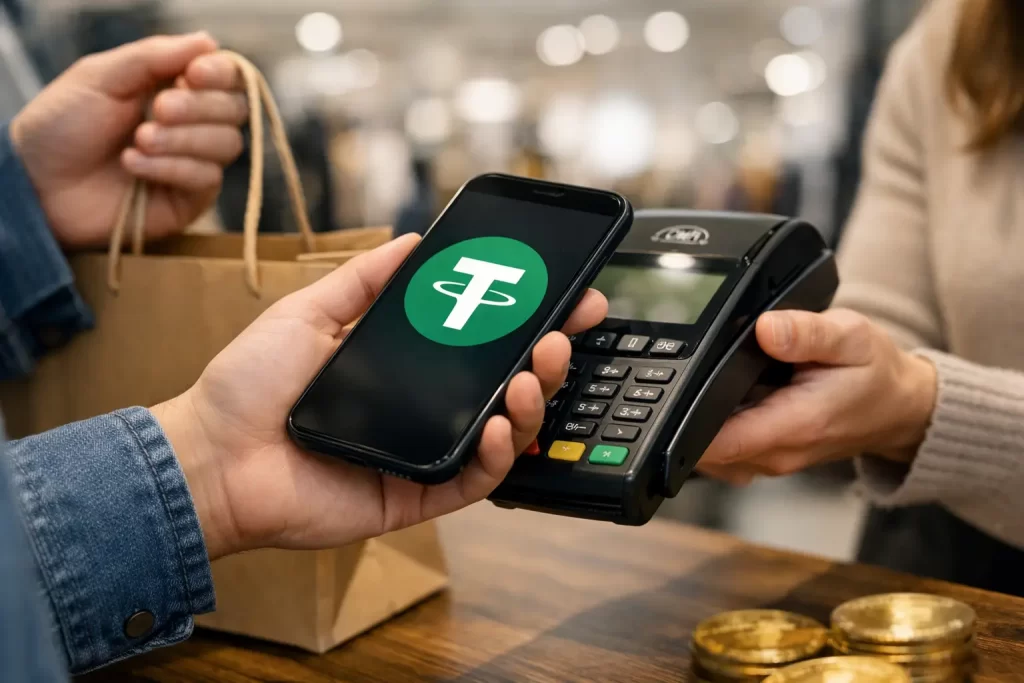
Table of Contents
Can you use USDT for in store purchases directly?
Sometimes, but not often.
A small number of merchants accept crypto payments at the register through their own wallet setup or a crypto payment processor. In those cases, you may be able to pay in USDT by scanning a QR code or sending funds on a supported network. That sounds simple, but there are trade-offs. Merchant acceptance is still limited, checkout can be slower, and network compatibility matters. If the store wants Tron-based USDT and your funds are on Ethereum, you have a problem before the receipt prints.
For most people, the more practical answer to can you use USDT for in store purchases is this: yes, through a crypto card that handles conversion in real time. That model removes the merchant adoption problem. If the store accepts regular card payments, your USDT becomes usable there.
How USDT spending works at a store
When you use a crypto-linked debit card, the payment experience is familiar. You tap, insert, or add the card to Apple Pay or Google Pay and check out like you normally would. Behind the scenes, the platform converts the supported crypto balance into fiat to settle the purchase.
That means you are not asking the merchant to accept stablecoins. You are using card rails the merchant already trusts. This is the key reason crypto cards have become the most realistic bridge between holding digital dollars and spending them in everyday life.
The best setups make this feel instant. You don’t need to sell USDT on an exchange, wait for a bank transfer, and then spend from your checking account. Your balance stays in crypto until you’re ready to use it. At the point of purchase, the conversion happens in real time.
Why crypto cards are the real answer
If your goal is daily spending, convenience wins.
Direct crypto acceptance in retail still has gaps. Cashiers are not trained for wallet-based payments. Refunds can get messy. Network fees and confirmation times can create friction at the register. And many stores simply do not want price volatility or operational complexity, even with stablecoins.
A card-based model solves most of that. It gives crypto holders access to the same merchant ecosystem everyone else uses. It also keeps the experience familiar for travelers, freelancers, remote workers, and anyone moving between countries or currencies. If you already hold value in USDT, a card lets you keep that flexibility without forcing you back into old banking workflows every time you want groceries, gas, or lunch.
That is where platforms like KazePay fit naturally. The value is not just that you can spend crypto. The value is that you can do it fast, in real time, and with the security controls serious users expect.
Where can you use USDT for in-store purchases?
The practical answer is anywhere the linked card network is accepted, assuming your provider supports in-store transactions in that region and the merchant takes card payments.
That includes everyday places like restaurants, retail stores, hotels, transportation counters, pharmacies, and supermarkets. It can also extend to mobile wallet payments, which matters if you prefer tapping your phone instead of carrying a physical card.
Still, there are limits. Some merchants block prepaid or specialized card categories. Some countries have tighter payment rules. And some transaction types, especially high-risk categories, may trigger additional checks. So while “accepted worldwide” is directionally true for many strong card programs, the exact experience depends on the card issuer, local regulations, and merchant acceptance rules.
What to look for before spending USDT in person
Not all crypto cards are built the same, and the details matter more than the marketing.
First, check which stablecoins are supported and how conversion works. Some platforms support USDT but only on certain networks. Others support multiple funding paths but apply different fees or timing depending on the asset. If you want spending to feel instant, you need clarity on whether conversion happens automatically at purchase or requires a manual preload.
Second, pay attention to security. If you are moving value from self-custody or external wallets into a spending product, you want strong controls around wallet screening, transaction monitoring, multi-factor authentication, and account protection. Convenience is great, but convenience without guardrails is a liability.
Third, look at geographic reach and wallet compatibility. For globally mobile users, support across countries matters. So does the ability to add your card to Apple Pay or Google Pay. If you are using USDT as a practical money layer, the payment experience should work where your life happens, not only in one market.
Fourth, understand the fee model. Conversion fees, card issuance fees, ATM withdrawal fees, inactivity fees, and foreign transaction fees can shape the real cost of spending. Transparent pricing is a feature, not a footnote.
The trade-offs nobody should ignore
Using USDT for in-store spending is easier than it used to be, but it is not magic.
You are still relying on an intermediary if you use a crypto card. That means the provider’s compliance standards, risk engine, custody setup, and operational uptime all matter. A weak platform can create delays, freezes, or security exposure. A strong one gives you speed with protection.
There is also the issue of regulation. Stablecoin access and card availability can vary by jurisdiction. A feature available in one country may be limited in another. If you travel often, it is worth checking supported regions before assuming the same experience everywhere.
Then there is the tax and accounting side. Depending on where you live, spending crypto may create a reportable event, even when you are using a stablecoin. The price volatility issue is lower with USDT than with assets like BTC or ETH, but recordkeeping may still matter. Convenience at checkout does not erase compliance on the back end.
Is paying with USDT better than cashing out first?
For many users, yes.
If you are already keeping working balances in USDT, spending through a crypto card is often faster than selling on an exchange and withdrawing to a bank. It reduces friction, shortens the path from asset to purchase, and keeps your funds more immediately accessible. That matters when you are traveling, managing freelance income, or simply trying to use digital dollars like actual dollars.
But it depends on your habits. If you rarely spend from crypto and prefer the familiarity of a bank account, manual cash-out may still feel more comfortable. If you spend regularly and want instant access, the card model is usually the better fit.
So, can you use USDT for in store purchases?
Yes, absolutely – but usually through a crypto-to-fiat payment layer rather than a merchant accepting USDT directly.
That is the real shift in crypto payments. You do not need to wait for every store on earth to become a crypto merchant. You need a secure, compliant, globally usable way to turn your USDT balance into spendable purchasing power at the register. When that infrastructure is in place, stablecoins stop feeling like something you only hold and start feeling like money you can actually use.
If you are holding USDT for flexibility, speed, and control, your spending tools should match that standard. The best setup is the one that lets you tap, pay, and move on with confidence.
Spend USDT In‑Store Without Cashing Out
You don’t need merchants to accept USDT directly. KazePay lets you spend USDT in stores by converting at the moment you tap or swipe, so checkout works like a normal card payment.
No exchange steps. No waiting. Just use your USDT balance when you pay.
👉 Sign up for KazePay and use USDT anywhere cards are accepted.