Rent is due, your phone bill is pending, and your balance is sitting in USDC or USDT. That is exactly where knowing how to pay bills using stablecoin debit card becomes practical, not theoretical. Instead of moving funds to an exchange, cashing out, waiting on a transfer, and hoping timing works, a stablecoin debit card lets you spend from your crypto balance in a format billers already understand.
For people who get paid in stablecoins, travel often, freelance across borders, or simply prefer to keep part of their cash position on-chain, this can cut out real friction. But the details matter. Not every bill can be paid the same way, recurring payments have their own quirks, and fees, settlement timing, and card controls can change the experience fast.
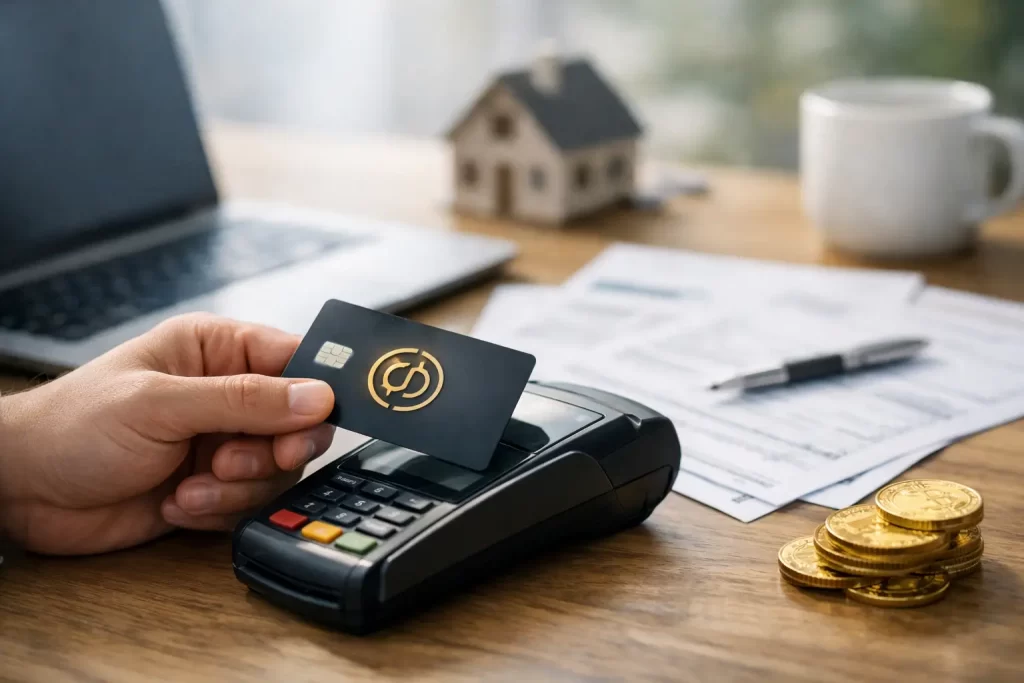
Table of Contents
How to pay bills using stablecoin debit card without extra steps
At the simplest level, a stablecoin debit card works like a traditional debit card at checkout while drawing value from your supported crypto balance. When you make a payment, the platform converts the stablecoin into local fiat at the point of purchase or settlement. That means your electric company, streaming service, landlord portal, or insurance provider receives a normal card payment, while you spend from USDT or USDC.
The practical setup is usually straightforward. You complete account verification, activate a virtual or physical card, fund the account or linked wallet with supported stablecoins, and then use the card details anywhere debit cards are accepted. If the biller accepts card payments online, you enter the card number, expiration date, and security code just as you would with any other debit card.
For mobile-first users, adding the card to Apple Pay or Google Pay can make utility or telecom payments even faster when the provider supports digital wallets. The point is convenience, but also speed. You are not manually off-ramping every time a bill lands in your inbox.
Which bills you can actually pay
Most card-friendly bills are a good fit. That includes mobile phone plans, internet, streaming subscriptions, software subscriptions, insurance payments, tuition deposits, tax prep fees, travel bookings, and many utility providers that accept debit cards directly through their billing portals.
Rent is more mixed. Some property managers and rent platforms allow debit cards, while others only allow ACH or bank transfer. Credit card bills can also be inconsistent. Some issuers let you make a debit card payment through a third-party service, while others require a bank account. Loan servicers, mortgage providers, and some government agencies often prefer ACH rails, so it depends on the merchant’s accepted payment methods more than the card itself.
That is the key distinction. A stablecoin debit card does not change what a biller accepts. It changes what you spend from on your side.
The step-by-step flow
If you want the cleanest version of how to pay bills using stablecoin debit card, think in four stages: get verified, fund the card, confirm acceptance, and pay.
1. Complete setup and security controls
Choose a provider that treats security and compliance as core infrastructure, not a marketing extra. You want clear onboarding, two-factor authentication, transaction monitoring, and strong wallet protections. If the platform screens wallet addresses for sanction exposure, mixer activity, and other risk signals, that is a feature, not friction. It reduces the chance that your funds get tangled up in preventable compliance problems later.
2. Load or connect supported stablecoins
Most crypto debit cards only support certain assets. For bill payments, stablecoins matter because they reduce price volatility between funding and spend. If your provider supports USDT and USDC, check which chains are accepted, whether deposits credit instantly, and whether there are network-specific fees before you move funds.
3. Verify how the biller processes debit cards
Before you rely on the card for a major payment, check whether the biller treats it as a debit purchase, a prepaid card, or a restricted payment type. Some merchants block certain card categories or add convenience fees for card payments. Others allow one-time card payments but not autopay.
4. Make the payment and monitor confirmation
Enter your card details, approve the payment, and watch the transaction in real time. Good platforms show the crypto amount spent, the fiat equivalent, the merchant, and the status. That visibility matters when you are paying a bill close to a due date and want proof the charge actually went through.
Recurring bills are where the real value shows up
One-time payments are easy. Recurring bills are where a stablecoin debit card starts to feel like a real money tool.
If your provider allows recurring merchant billing, you can use the card for subscriptions, software tools, mobile plans, and many household services just like any other debit card. This is especially useful if your income already lands in stablecoins. You can keep funds in USDC or USDT and let everyday expenses pull from that balance without the repeated exchange-to-bank shuffle.
Still, recurring payments need maintenance. If the available stablecoin balance drops below what the charge needs after conversion and fees, the payment can fail. The safe move is to keep a buffer. It also helps to turn on transaction notifications so you catch renewals, duplicate charges, or declines immediately.
Fees, FX, and limits can change the math
A stablecoin card can be fast, but fast does not always mean cheapest. Some providers charge card issuance fees, monthly fees, ATM fees, inactivity fees, or foreign transaction fees. Others make money through the spread between the stablecoin conversion rate and the fiat amount charged.
For bill payments, the biggest variables are usually card processing fees from the merchant and conversion costs from the card provider. A utility company might charge a flat debit fee. A rent portal might add a percentage. If you are paying a large invoice, those charges can matter more than the stablecoin side of the transaction.
Spending limits matter too. Daily card limits, single-transaction limits, and geographic restrictions can interfere with larger payments. If you plan to pay rent, tuition, or travel-heavy expenses, check the ceiling before the due date, not after a decline.
Security is not optional when bills are automated
Any card connected to recurring payments needs strong controls. That goes double when the funding source is digital assets.
Look for a platform with multi-factor authentication, card freeze controls, suspicious activity alerts, and clear dispute support. If the provider also uses multi-signature wallet security and wallet address risk screening, that adds another layer of confidence. It helps protect both your account and the broader payment ecosystem from compromised funds and flagged transactions.
This is one reason some users prefer a dedicated spending card instead of paying bills directly from a self-custody wallet whenever possible. You get convenience, but with better separation between long-term holdings and day-to-day spending.
Common problems and how to avoid them
The most common issue is assuming every biller that accepts cards will accept every crypto-backed card. Some merchants are strict about prepaid or international card types. Test with a smaller payment first when possible.
The second issue is timing. If you wait until the final hour, a pending authorization, a merchant-side processing delay, or a required verification step can create stress. Pay at least a day early for anything important.
The third issue is using volatile assets instead of stablecoins. If your goal is predictable bill payment, stablecoins are the better fit. They make budgeting easier and reduce the chance that a market move changes what your balance can cover.
When this works best
This setup is strongest for people already operating in stablecoins. Freelancers paid by international clients, remote workers moving between countries, digital nomads managing subscriptions across regions, and crypto-native users who want instant access to spending power all benefit from skipping the manual off-ramp cycle.
It is also a strong fit for users who want the familiarity of a debit card with modern controls layered on top. A secure card that converts in real time, works worldwide, and integrates with digital wallets can make stablecoins feel less like a side asset and more like usable money.
That is where a platform like KazePay fits naturally – fast card access, global acceptance, and security controls designed for real spending, not just holding.
When it may not be the best option
If most of your bills only accept ACH, bank transfer, or paper check, a stablecoin debit card will not replace your bank account. It may still cover subscriptions, travel, telecom, and utility payments, but not everything.
It may also be a weaker fit if you need guaranteed fixed-dollar settlement with zero conversion variability, or if the provider’s fee structure is too high for your payment volume. For large recurring obligations, even small percentage fees add up.
A stablecoin debit card is best treated as a flexible spending rail, not a magic replacement for every payment method. Used that way, it can remove a surprising amount of friction from day-to-day life.
If your money already lives in stablecoins, your bill payments should not have to wait for old rails to catch up.
Pay Bills From Stablecoins Without the Detour
Bills should be paid, not routed through extra steps. KazePay lets you use USDT or USDC for bills in a card format billers already understand — with conversion at checkout and clear controls to keep timing, fees, and approvals predictable.
Fewer transfers. Less waiting. More control over your cash flow.
👉 Sign up for KazePay and pay bills directly from stablecoins.